1800 Bartha Hermina Tollius
1800 Bartha Hermina Tollius
Design reference nr:
SKU:48500311
Couldn't load pickup availability
Dutch Early 19th-Century Floral Print – Perfect for Spencer Jackets & Traditional Dutch Bodices
Product Description
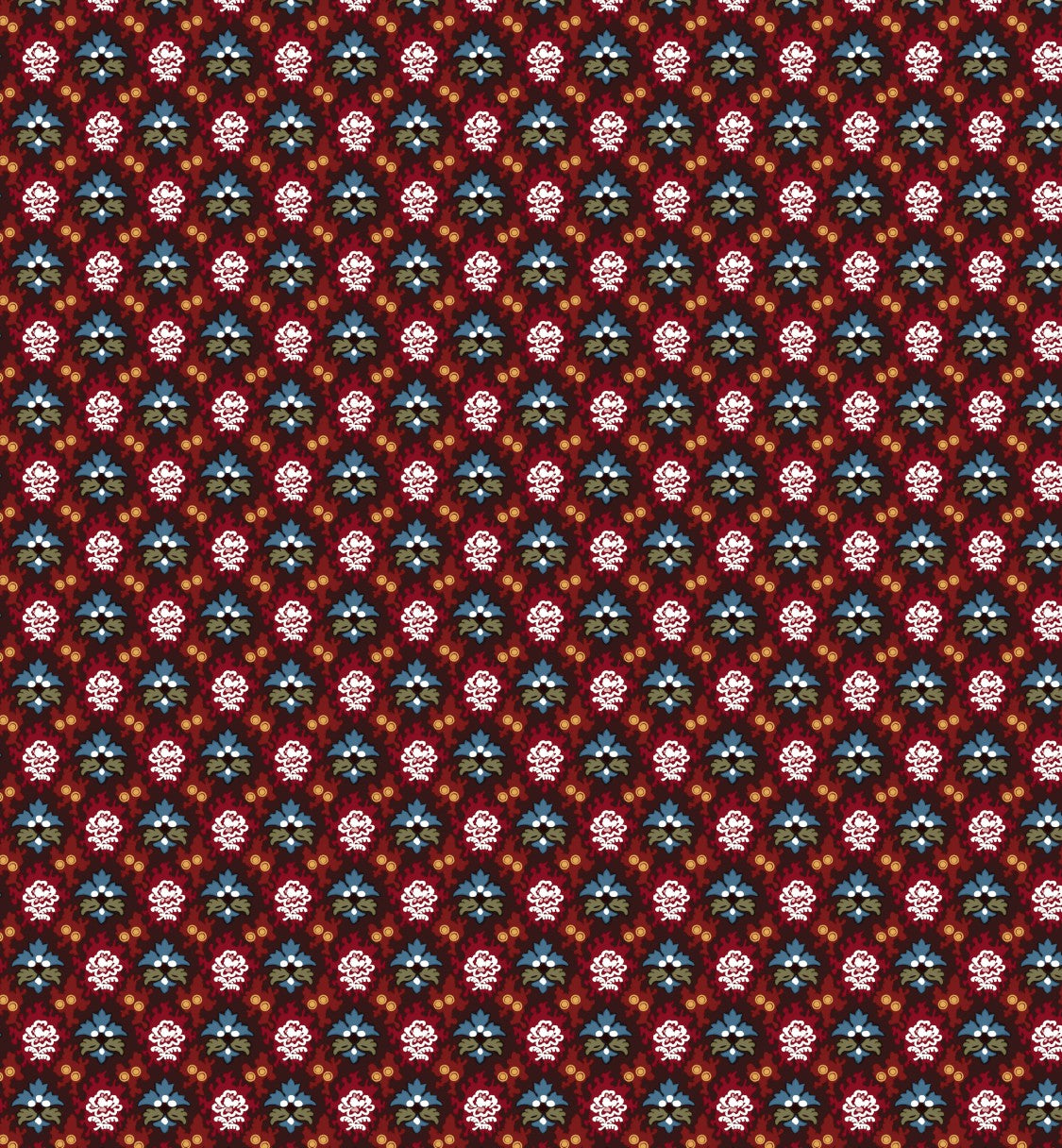
This historical fabric design is inspired by an early 19th-century Dutch printed cotton associated with regional clothing from villages such as Blaricum. The rich deep-red ground, delicate floral sprigs and balanced repeating layout recreate the distinctive appearance found in surviving Dutch textiles from the Regency and early 19th century.
The small-scale floral pattern makes this fabric exceptionally versatile. It is particularly well suited for traditional Dutch bodices, but also for Regency-era Spencer jackets, fitted jackets, petticoats, children's clothing and numerous historical sewing projects. The dense floral repeat creates an elegant visual rhythm while remaining historically appropriate for everyday and regional dress.
Printed on high-quality fabric, this design is ideal for museum reproductions, living history, folk costume, historical interpretation and period-inspired garments. Its authentic scale and colour palette allow makers to recreate the characteristic appearance of early nineteenth-century Dutch clothing with confidence.
Well suited for
- Dutch traditional bodices
- Regency Spencer jackets (c. 1795–1820)
- Early 19th-century dresses
- Petticoats and skirts
- Historical children's clothing
- Folk costume reproduction
- Museum interpretation projects
- Living history and reenactment
- Lightweight cotton garments
- Linen and cotton sewing projects

Bartha Hermina Tollius (1780–1847)
Born in Amsterdam in 1780, Bartha Hermina Tollius belonged to an educated Dutch family and became known for her refined pastel portraits. Political events forced her family into exile during the late eighteenth century, an experience she carefully documented in her diary. Her work reflects observation, craftsmanship and resilience—qualities that also characterise the surviving Dutch textiles of her era.
Although this design is not directly connected to Bartha herself, she represents the educated and creative world of the Netherlands during the same period, providing an authentic historical context for early nineteenth-century Dutch textile traditions.