1891 Marie Curie - Misty Himalayas
1891 Marie Curie - Misty Himalayas
Design reference nr:
SKU:48500239
Couldn't load pickup availability
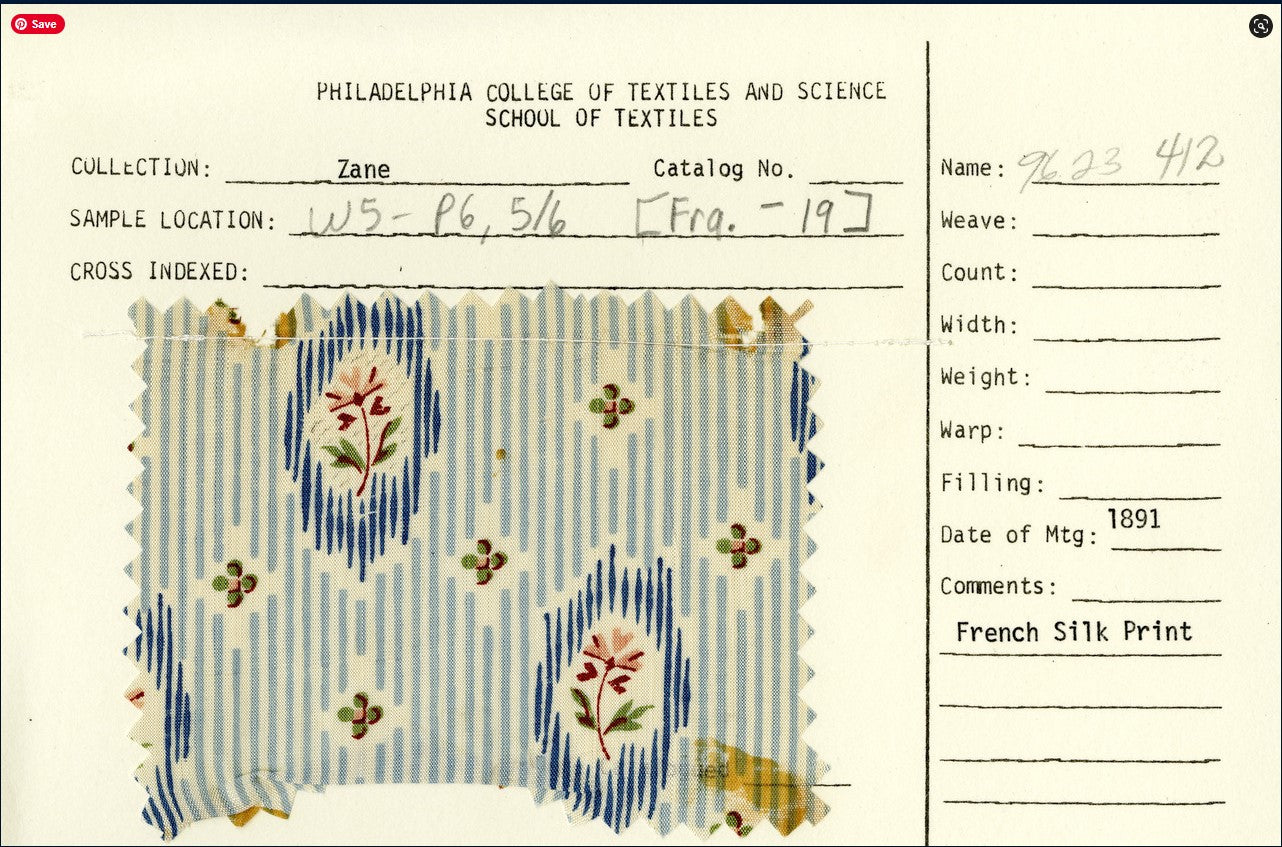
1890s French Silk Stripe Print
Product Description
A delicate reconstruction inspired by a late 19th-century French silk print, featuring fine vertical stripes with small floral motifs. The light, airy composition reflects the refined yet practical aesthetic of the 1890s, making it highly suitable for historically informed garments and reinterpretations.
The alternating stripe rhythm combined with scattered floral sprigs creates movement and visual softness. This balance between structure and ornament was typical of textiles used for shirtwaists and informal daywear during the decade.
Well suited for
Ideal for shirtwaists, walking dress bodices, and late Victorian blouses. Works particularly well for garments requiring light structure and visual elongation. Also suitable for children's wear, summer garments, and historically inspired interiors where a subtle yet characterful print is desired.
Design & Historical Context
By the 1890s, striped and small-scale printed fabrics became widely used in women's daywear, especially for shirtwaists. These garments reflected the rise of a more independent and active lifestyle. The combination of fine stripes and floral motifs was typical of French silk prints adapted into more accessible materials.

Marie Curie (1867–1934) was one of the most influential scientists of her time and a contemporary of this textile tradition. Working in Paris during the same period, she embodied the emerging role of women in public and professional life.
The shirtwaist—often made from fabrics like this—became a symbol of the “New Woman”: educated, independent, and active. Practical yet refined textiles supported this shift, bridging function and elegance in everyday dress.