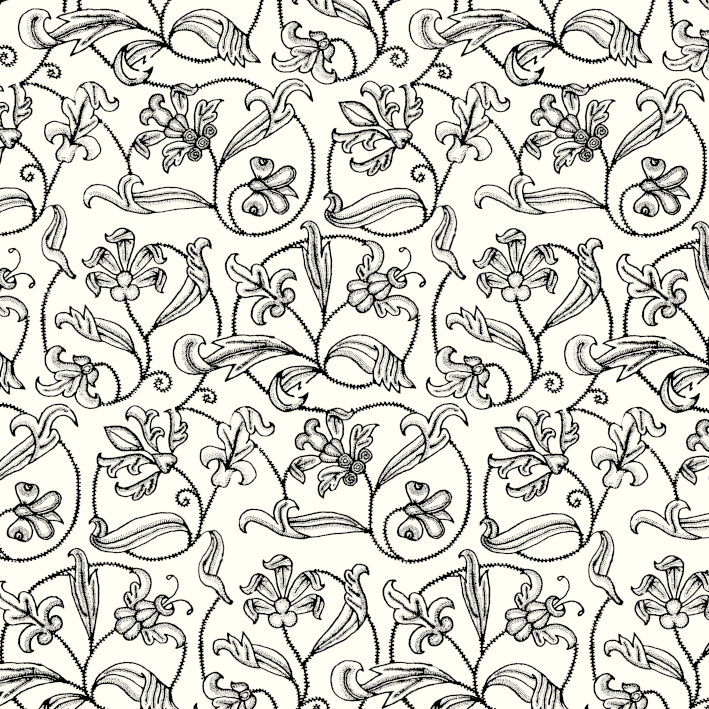
1620 Elizabeth Stuart
1620 Elizabeth Stuart
Design reference nr:
SKU:48800334
Couldn't load pickup availability
17th Century Blackwork Embroidery
Blackwork embroidery was one of the most elegant decorative techniques used throughout Europe during the 16th and early 17th centuries. Traditionally worked with black silk thread on white linen, blackwork adorned collars, cuffs, shirts, aprons, caps, household linens, and decorative interior textiles.
During the 1600s, blackwork embroidery gradually evolved from strict geometric Tudor-inspired patterns into softer floral motifs, scrolling vines, and more organic decorative compositions influenced by nature and contemporary embroidery styles.
The contrast between deep black embroidery and light linen created a refined and highly recognisable aesthetic associated with craftsmanship, status, and historical dress.
Today, blackwork remains highly appreciated among historical sewing enthusiasts, reenactors, embroidery artists, and museum-inspired textile projects.
Well suited for:
– historical embroidery projects
– 17th-century inspired garments
– collars, cuffs, caps, and aprons
– household linens and decorative textiles
– costume design and reenactment
– textile study and traditional needlework
Historical technique:
Traditionally stitched using black silk thread on white linen fabric, often worked in double running stitch (Holbein stitch) and counted embroidery patterns.
This design may also be suitable for additional hand embroidery if desired. Some customers choose to stitch directly over the printed pattern to create a more textured and historically inspired appearance.
If you would prefer the pattern printed in a lighter tone for embroidery purposes — for example as a softer guide for stitching over by hand — you are very welcome to get in touch before ordering.

Elizabeth Stuart (1596–1662), often known as The Winter Queen, was one of the most fascinating royal women of early 17th-century Europe. Her elegant style, richly embroidered garments, delicate lace collars, and refined court fashion became closely associated with the luxurious aesthetics of the 1620s.
Portraits of Elizabeth Stuart continue to inspire historical sewing enthusiasts, particularly within blackwork embroidery, linen work, lace-making, and early Baroque costume studies.