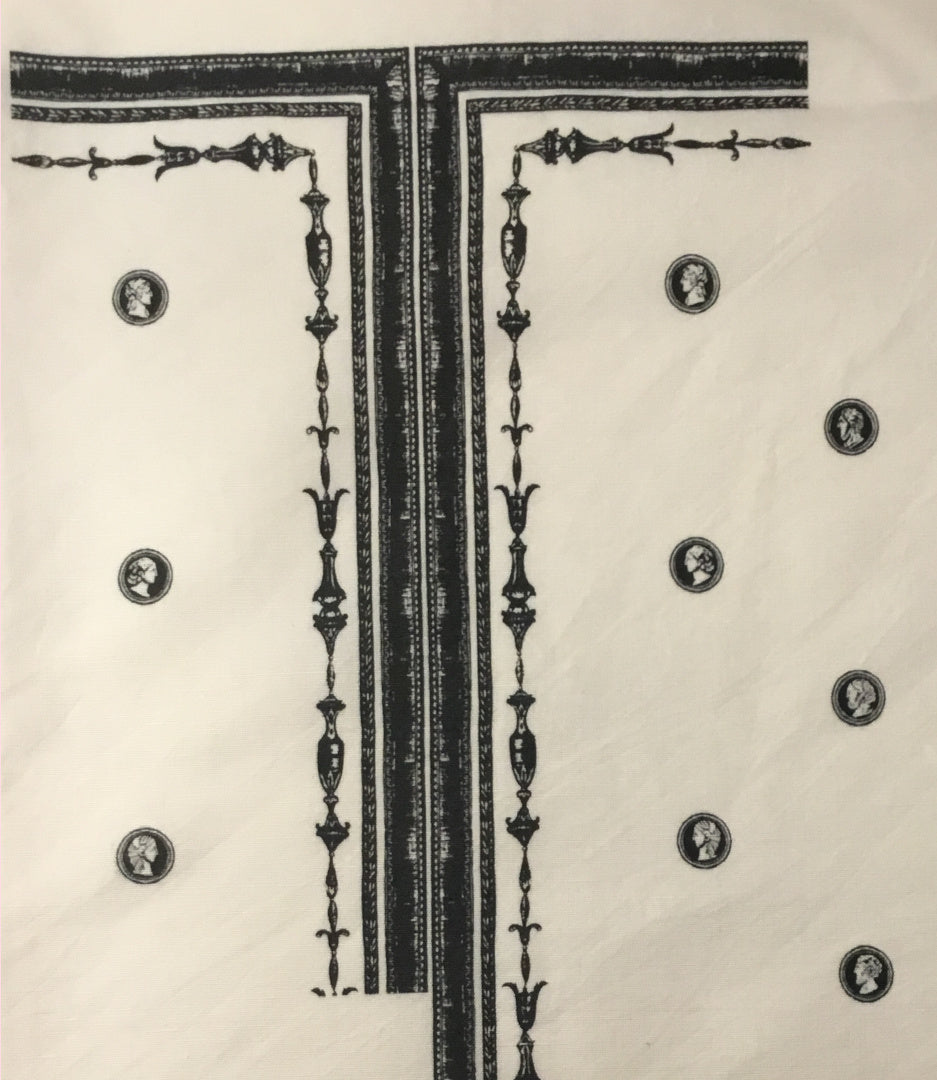
1780 Carin du Rietz Waistcoat Panel
1780 Carin du Rietz Waistcoat Panel
Design reference nr:
SKU:48800123
Couldn't load pickup availability
1785–1795 Waistcoat Cotton for Tailored Fronts
Product Description
This refined late 18th-century design is based on an original uncut waistcoat front dated to 1785–1795, preserved in the Cooper Hewitt collection. The composition reflects the structured layout typical of waistcoat panels, where ornament is carefully positioned to follow the cut of the garment.
The pattern shows the transition towards more controlled and symmetrical decoration, suited for tailored menswear. Its balanced structure makes it especially suitable for garments where precision and placement are essential.
Well suited for
Waistcoats, tailored fronts, historical menswear, fitted bodices, and structured 18th-century sewing projects where panel-based design and decorative placement are important.
Design & Historical Context
The original textile was printed on cotton using engraved plate printing on plain weave, a technique that allowed for fine detail and controlled repetition. Uncut waistcoat fronts were produced as complete panels, ready to be cut and assembled into garments.
This type of textile reflects the shift in late 18th-century fashion towards more tailored silhouettes and precise decorative placement, particularly in menswear.

Reference Person – Carin Du Rietz
Carin Du Rietz (born 1766) was a Swedish noblewoman known for her extraordinary determination and independence. Raised in a noble family in Småland, she was described as intelligent, strong-willed, and spirited, with both courage and ambition.
Defying the strict expectations placed on women of her time, she disguised herself as a man and enlisted in the Royal Life Guards in Stockholm. She successfully served as a soldier for a period, demonstrating both skill and resilience in a role that was entirely closed to women in the 18th century.
Her story reflects a rare combination of boldness and individuality, offering a glimpse into the boundaries of gender, identity, and social structure in late 18th-century Sweden.