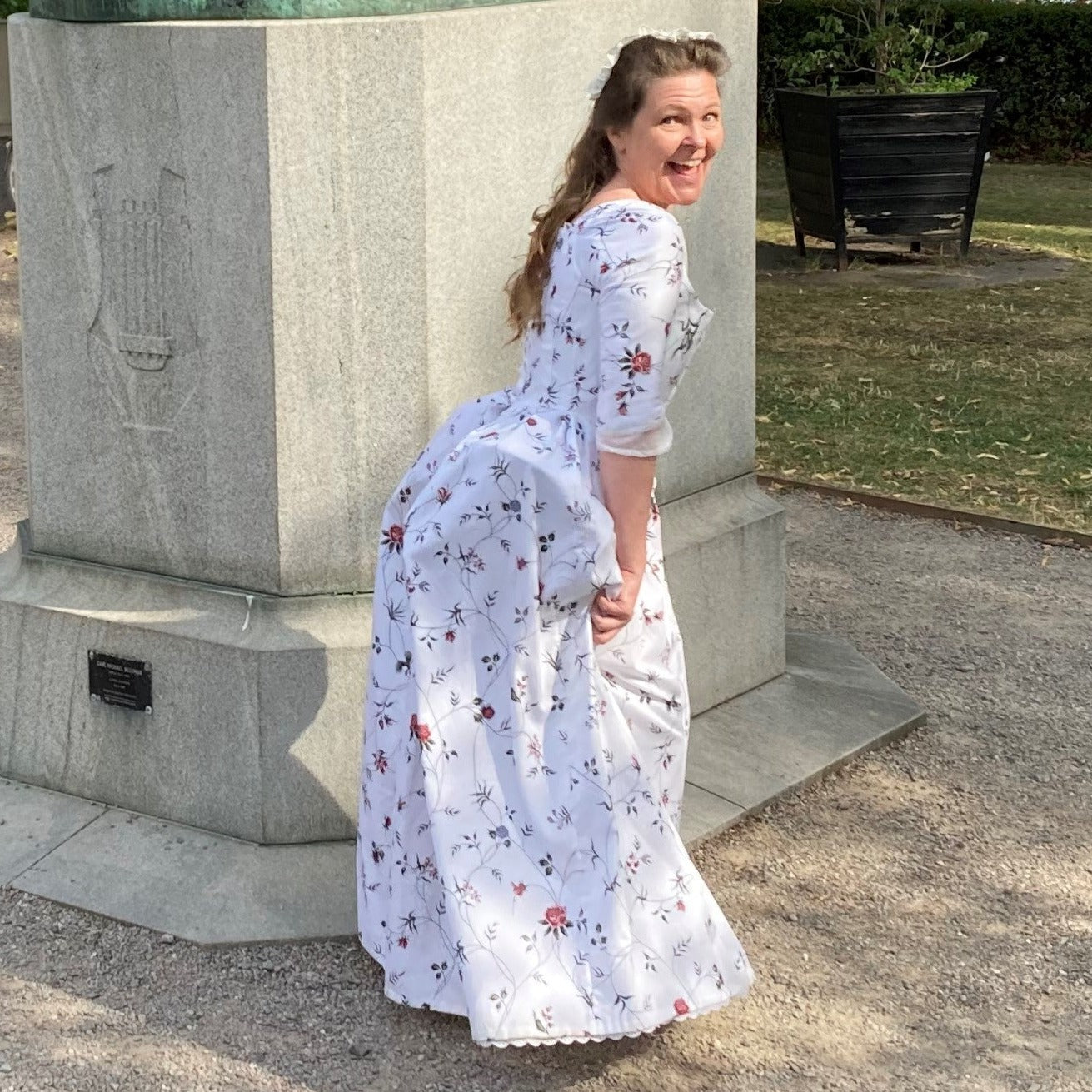
1785 Brita Sidonia Gadd
1785 Brita Sidonia Gadd
Design reference nr:
SKU:48790033
Couldn't load pickup availability
1785 Floral Rococo Historical Fabric
This late 18th century inspired floral fabric features delicate trailing flowers, slender curving stems, scattered blossoms, and fine Rococo movement across a soft light background. The airy composition reflects the elegant textile aesthetics associated with fashionable Robe à l’Anglaise gowns during the 1780s and 1790s.
The refined floral layout creates a graceful and highly decorative textile surface suitable for historical dressmaking, open gowns, petticoats, jackets, furnishing projects, and period-inspired interiors. The balanced composition allows the fabric to remain visually elegant even across larger gathered skirts and flowing gown silhouettes.
Well suited for
Perfect for Robe à l’Anglaise, Italian gowns, open dresses, petticoats, jackets, historical reenactment, museum-inspired sewing, curtains, bed hangings, cushions, and elegant Rococo interiors.
Design & Historical Context
The Robe à l’Anglaise became one of the defining dress styles of the late 18th century, recognised for its fitted back, flowing skirts, and refined textile decoration. Floral cotton fabrics with delicate curving motifs became especially fashionable for elegant daywear and decorative gowns.
This historical reproduction fabric recreates the lightness, movement, and refined floral elegance associated with late Rococo textile design while remaining highly suitable for modern historical sewing and furnishing projects.

Brita Sidonia Gadd was published in Finland’s first newspaper in 1771 and became the first woman to be published in a Finnish newspaper.
She was the daughter of Bishop Jonas Fahlenius and Sara Charlotta Teppati and married Pehr Adrian Gadd in 1759. Her connection to the Aurora Society and early literary culture places her within the intellectual world of the late 18th century Nordic Enlightenment.