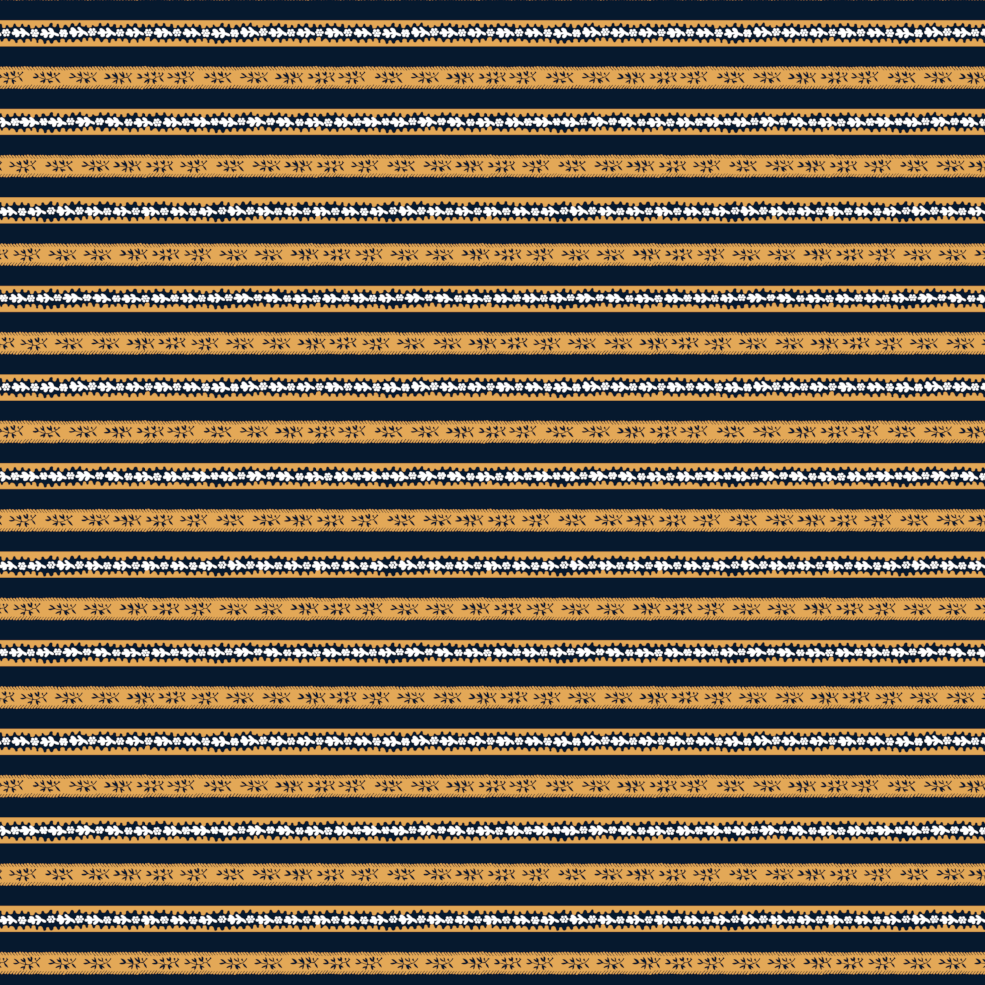
1810 Frances Burney
1810 Frances Burney
Design reference nr:
SKU:48800038
Couldn't load pickup availability
Product Description
This historical cotton fabric design is inspired by an early 19th-century printed men's waistcoat from Lammi, Finland. The pattern features elegant narrow stripes combined with small floral and geometric motifs in deep blue, warm ochre yellow, white, and black, creating a refined Regency-era appearance associated with Nordic folk costume and historical menswear traditions.
The original waistcoat combines printed cotton fabric with linen backing and reflects the decorative yet practical tailoring traditions used during the late Georgian and early 19th century. The narrow stripe repeat creates a highly wearable historical textile especially suitable for waistcoats, Spencer jackets, short jackets, petticoats, and Regency-inspired garments.
This reconstructed design works beautifully both for historical menswear and elegant womenswear. The directional stripe layout creates flattering movement in tailored garments while also adapting well for gathered skirts, petticoats, folk costume garments, and historical interiors.
Well suited for
– Regency waistcoats and historical vests
– Spencer jackets and short Regency jackets
– Petticoats and gathered skirts
– 19th-century Nordic folk costume projects
– Historical menswear and tailoring projects
– Regency gowns and transitional fashion
– Theatre costumes and reenactment clothing
– Historical interiors and decorative textile projects
Design & Historical Context
The original waistcoat originates from Lammi, Finland, and belongs to the historical textile traditions associated with Nordic folk costume and Regency-era menswear. Printed cotton fabrics with small geometric and floral motifs became fashionable throughout Europe during the late 18th and early 19th century, especially for elegant daywear and tailored garments.
The repeating stripe construction creates a refined and balanced textile surface particularly suitable for waistcoats and Spencer jackets, where narrow decorative bands emphasize tailoring and silhouette. The design also adapts beautifully for petticoats and gathered garments, where the striped structure creates elegant movement through folds and drape.

Reference Person: Frances Burney (1752–1840), also known as Fanny Burney and later Madame d’Arblay, was an English novelist, diarist, and playwright. Her writings provide valuable insight into Georgian and Regency society, fashion, manners, and everyday life during the same cultural period associated with elegant printed cotton textiles and historical tailoring traditions.