1810 Phillis Wheatley
1810 Phillis Wheatley
Design reference nr:
SKU:48800070
Couldn't load pickup availability
Product Description
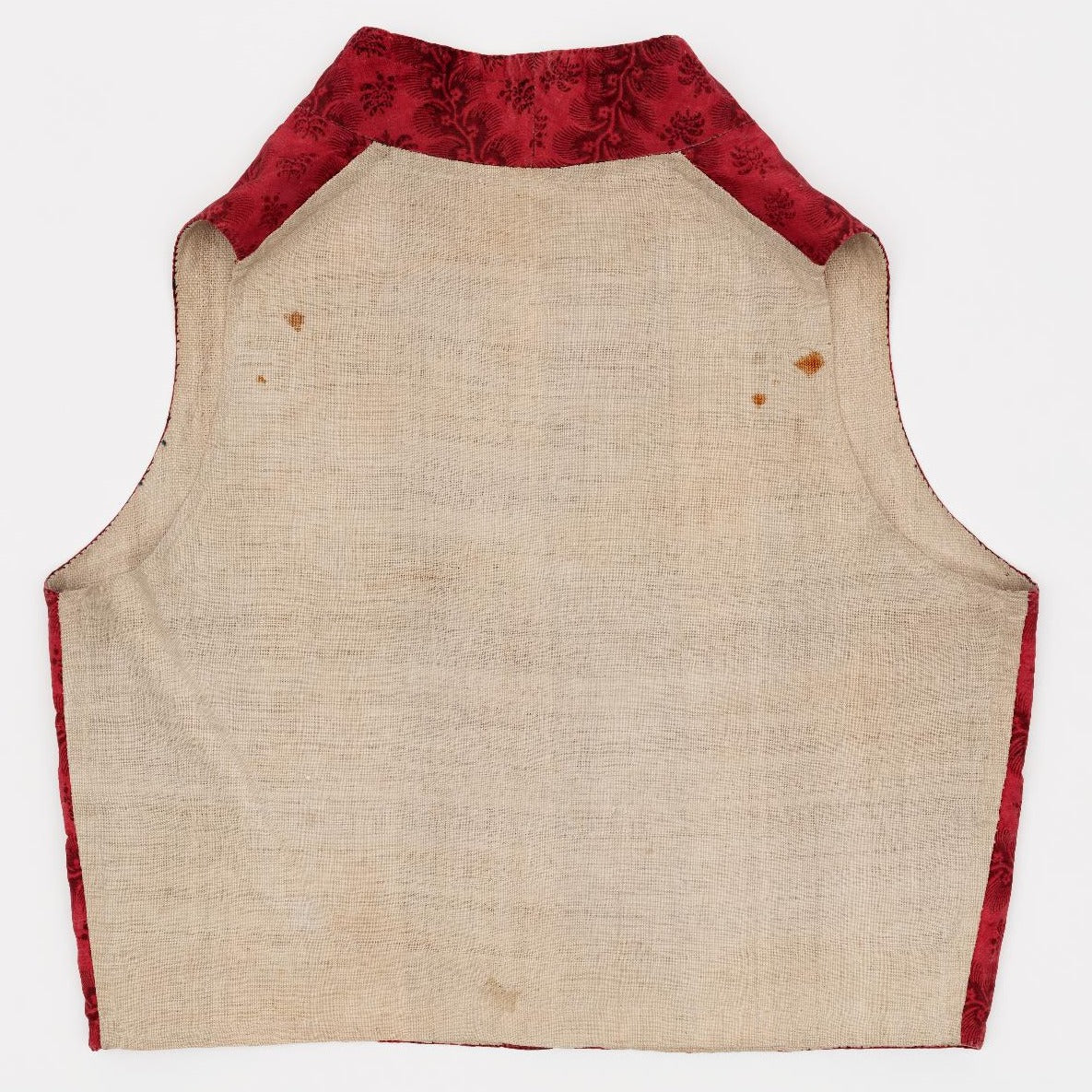
This historical cotton fabric design is inspired by an early 19th-century printed men's waistcoat dated around 1810. The pattern features richly decorative floral and wave-like motifs arranged across a deep red ground, creating a bold yet elegant Regency-era appearance associated with both fashionable menswear and Nordic folk costume traditions.
The original waistcoat was made from printed cotton fabric combined with linen backing, reflecting the practical but decorative textile traditions used throughout the late Georgian and early 19th century. The flowing directional motif creates a lively textile surface especially suitable for waistcoats, petticoats, jackets, folk costume garments, and historical interiors.
This reconstructed design works beautifully both as a historical waistcoat fabric and as a striking petticoat textile when the fabric direction is rotated. The repeating decorative bands create elegant movement in gathered skirts and petticoats while still preserving the strong visual rhythm of the original men's garment.
Well suited for
– Historical men's waistcoats and Regency vests
– Petticoats and gathered skirts
– 19th-century Nordic folk costume projects
– Regency jackets and short gowns
– Historical costume and reenactment clothing
– Theatre costumes and museum reproduction sewing
– Historical interiors and decorative textile projects
– Doll clothes and miniature historical garments
Design & Historical Context
The original waistcoat originates from the early 19th century and belongs to the historical textile traditions associated with printed cotton menswear and Nordic folk costume clothing. Decorative printed cotton fabrics became increasingly popular during this period, combining practicality with fashionable ornamentation.
The richly patterned red ground together with the flowing decorative stripes creates a dramatic textile surface especially effective for waistcoats and gathered garments. When turned in a different direction, the design also adapts beautifully for petticoats and skirts, where the repeating ornamental bands create elegant movement through folds and drape.

Reference Person: Phillis Wheatley Peters (1753–1784) was an American author and is considered the first African-American author to publish a book of poetry. Her collection Poems on Various Subjects, Religious and Moral, published in London in 1773, brought her international recognition during the same historical period associated with elegant printed cotton textiles and Regency-era fashion culture.