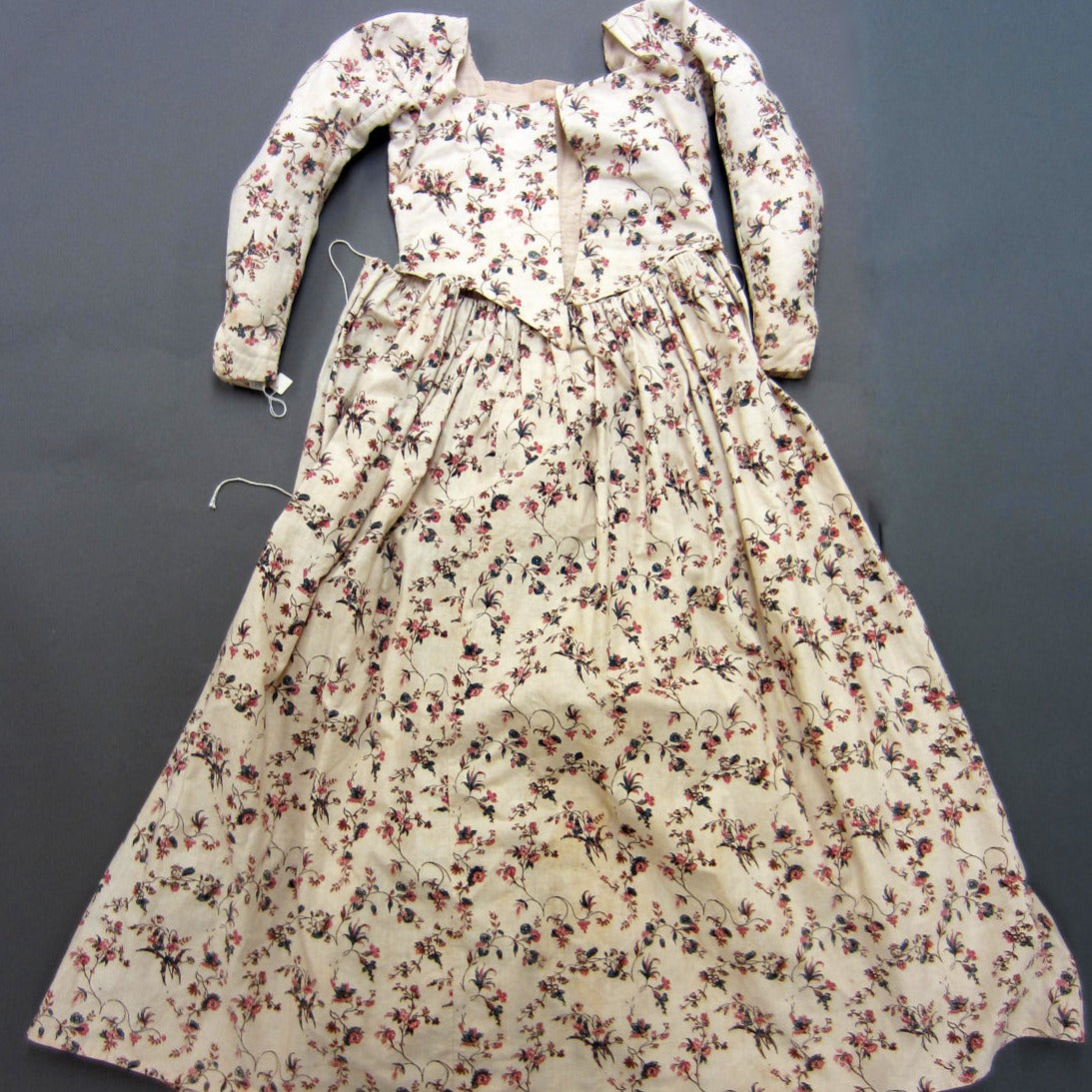
1785 Catharina Juliana Eckerman
1785 Catharina Juliana Eckerman
Design reference nr:
SKU:48800011
Couldn't load pickup availability
Late 18th-Century Floral English Block Print Design, c. 1785–1795
Product Description
This light and graceful floral cotton fabric is inspired by late 18th-century English block-printed textiles, featuring small-scale blossoms, delicate trailing stems, and airy spacing that gives the design a refined yet informal rhythm. The soft palette of reds, blues, and gentle greens on a pale ground reflects the fashionable cottons produced for both domestic wear and export markets during the closing decades of the 1700s.
The original inspiration comes from an English block-printed cotton dress dated to c. 1785–1795. Such fabrics were commonly produced in England for the international export market and played a central role in spreading fashionable printed cottons across Europe.
Place of origin: England, United Kingdom
The pattern has an elegant lightness that reads beautifully across full garment panels, making it particularly suitable for dresses and daywear from the late Georgian period. Its balanced repeat allows the design to flow naturally without overpowering the form of the garment.
This fabric is especially well suited for late 18th-century dresses, including transitional styles leading toward early Regency silhouettes.
Ideal for:
- Late 18th-century dresses and day gowns
- Transitional Georgian to early Regency garments
- Historically inspired summer dresses
- Light interiors and refined textile projects

Eckerman came from a well-established bourgeois family with strong ties to the magistrate class. Although her father, Bengt Edvard Eckerman, pursued a military career, her background placed her firmly within Sweden’s educated elite. Women of her milieu often moved between social, cultural, and political spheres, shaping opinion in less formal but influential ways.
Modern scholarship also links her to the intellectual climate surrounding Catharina Ahlgren and the journal Brefwäxling, which articulated early ideas on women’s rights and marriage—an environment that helps contextualise Eckerman’s public presence.