

Historically Accurate Fabrics – Because the Details Matter
Dusty Designs from the Past – Freshly Recreated by Suvi
-
1770 Cécile Fatiman
Regular price From €23,23 EURRegular priceUnit price €23,23 per m -
1770 Charlotte De Geer
Regular price From €23,23 EURRegular priceUnit price €23,23 per m -
1760 Sigrid Charlotta Wrede af Elimä
Regular price From €23,74 EURRegular priceUnit price €23,74 per m -
1798 Sophia Cecil
Regular price From €24,24 EURRegular priceUnit price €25,25 per m

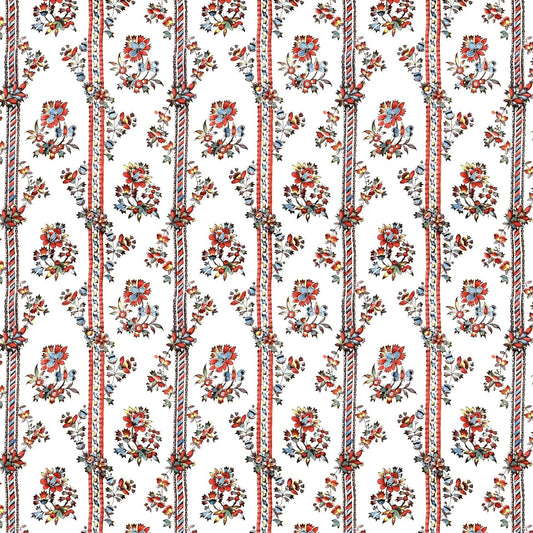


Victorian, Belle Époque & Gilded Age
-

1890s Fabric Design
The 1890s blended late-Victorian elegance with emerging modern design. 1890s fabrics featured...
-

1880s Fabric Design
Fashion moved from softness to structure between the 1870s and 1880s. The...
-

1870s Fabric Design
1870s fabric design favoured rich Victorian colours — deep reds, blues, greens...


The Age of Revolution & Crinoline
-

1860s Fabric Design
The 1860s brought rapid change in textile design. Industrial weaving and printing...
-

1850s Fabric Design
In the 1850s, fabrics became lighter and more practical. Printed cottons with...
-

1840s Fabric Design
By the 1840s, fabric design shifted toward refined Victorian aesthetics. Florals, paisleys...


The Age of Empire & Romanticism
-

1830s Fabric Design
The 1830s embraced bold expression. Colours became brighter, patterns more intricate and...
-

1820s Fabric Design
The 1810s marked the height of Regency elegance, with high Empire waistlines,...
-
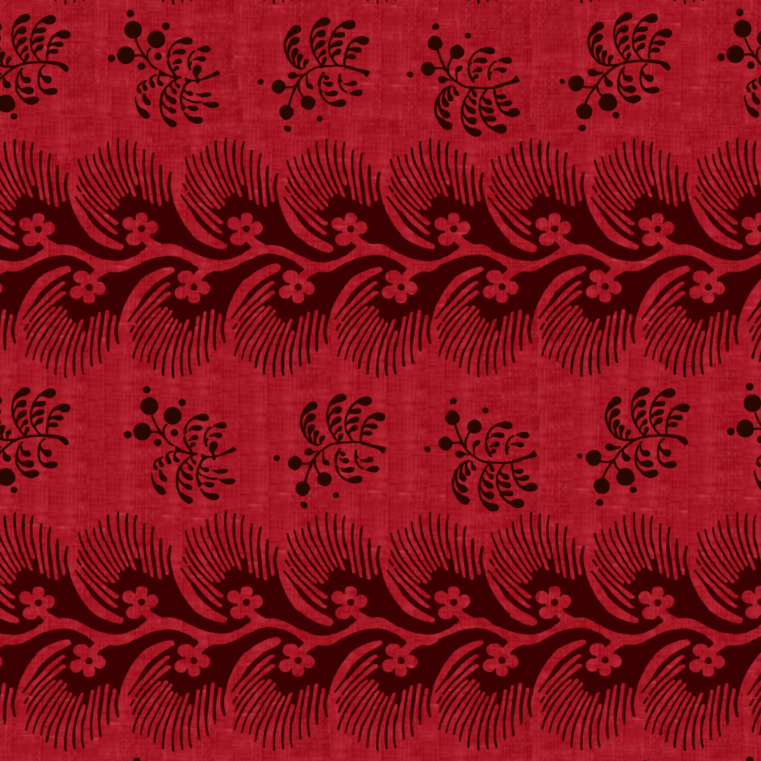
1810s Fabric Design
Early 1800s textiles were defined by neoclassical simplicity, featuring light muslins, fine...


The Age of Revolution & Neoclassicism
-

1800s Fabric Design
The 1790s favoured simplicity, with light muslins, restrained prints and elegant silhouettes...
-

1790s Fabric Design
The 1790s marked a transition from aristocratic splendour to neoclassical simplicity. Inspired...
-

1780s Fabric Design
The 1780s reflected the height of late Rococo elegance, with fitted bodices,...


The Age of Rococo & Enlightenment
-

1770s Fabric Design
The 1770s marked the transition from Rococo exuberance to early Neoclassical elegance....
-
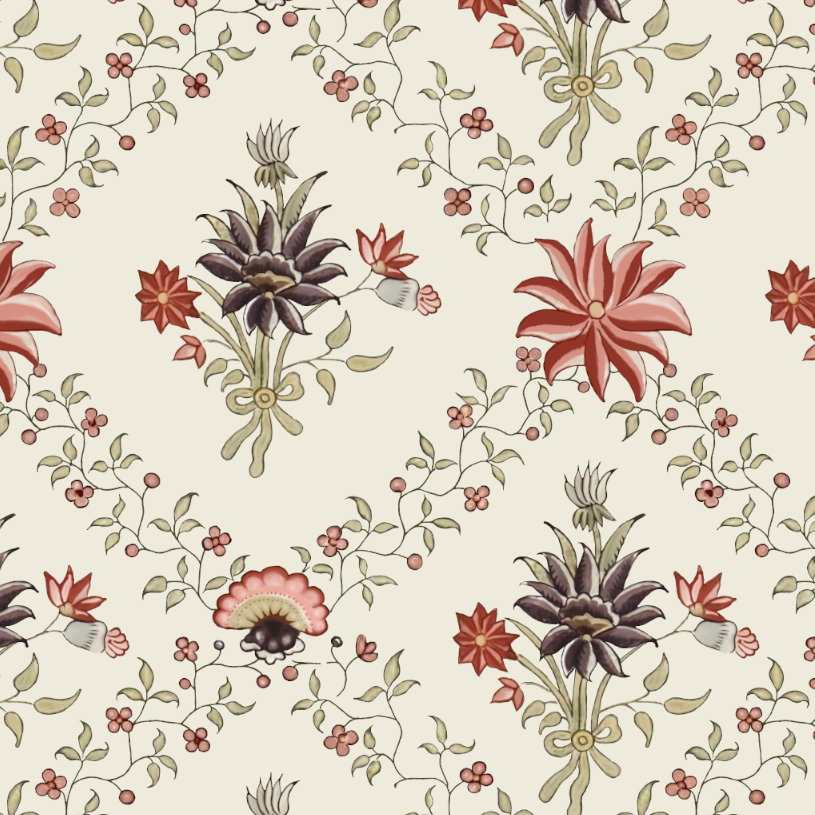
1760s Fabric Design
The 1760s combined Rococo elegance with the first signs of industrial innovation....
-

1750s Fabric Design
The 1750s embodied the elegance of the Rococo era. Delicate florals, flowing...


The Age of Baroque & Early Rococo
-

1740s Fabric Design
The 1740s embraced the light, decorative style of the Rococo era. Fabrics...
-

1710s Fabric Design
Block-printed fabrics existed in the 1710s, but few examples survive today. Early...


The Age of Baroque
-
1661 Marie-Angelique de Fontanges
Regular price €30,30 EURRegular priceUnit price €30,30 per m -
1699 Eleonore of Hesse-Rotenburg
Regular price €30,30 EURRegular priceUnit price €30,30 per m -
1625 Marie de Rohan
Regular price From €30,30 EURRegular priceUnit price €30,30 per m -
1620 Elizabeth Stuart
Regular price €30,30 EURRegular priceUnit price €30,30 per m


The Age of Chivalry & Early Renaissance
-
1456 Anne Neville
Regular price From €30,30 EURRegular priceUnit price €30,30 per m -
1300 princess Khutulun - Wild Strawberry
Regular price €30,30 EURRegular priceUnit price €30,30 per m -
1300 princess Khutulun - Ruri-iro
Regular price €30,30 EURRegular priceUnit price €30,30 per m


From Prehistory to the High Middle Ages
-
4000 BC Verla
Regular price From €30,30 EURRegular priceUnit price €30,30 per m -
1000 Zoë Porphyrogenita
Regular price From €30,30 EURRegular priceUnit price €30,30 per m -
1250 Shajar al-Durr
Regular price From €30,30 EURRegular priceUnit price €30,30 per m


Fragments of History
-
1780 Michelle de Bonneuil - Colourfull - 135 x 135 cm
Regular price €40,40 EURRegular priceUnit price €40,40 per item -
1760 Hedda Eleonora - Pillow Front
Regular price €8,59 EURRegular priceUnit price €8,59 per item -
1780 Michelle de Bonneuil - Colourfull -Pillow Front
Regular price €8,79 EURRegular priceUnit price €8,79 per item


