1810 Elizabeth Fry
1810 Elizabeth Fry
Design reference nr:
SKU:48500032
Couldn't load pickup availability
Product Description
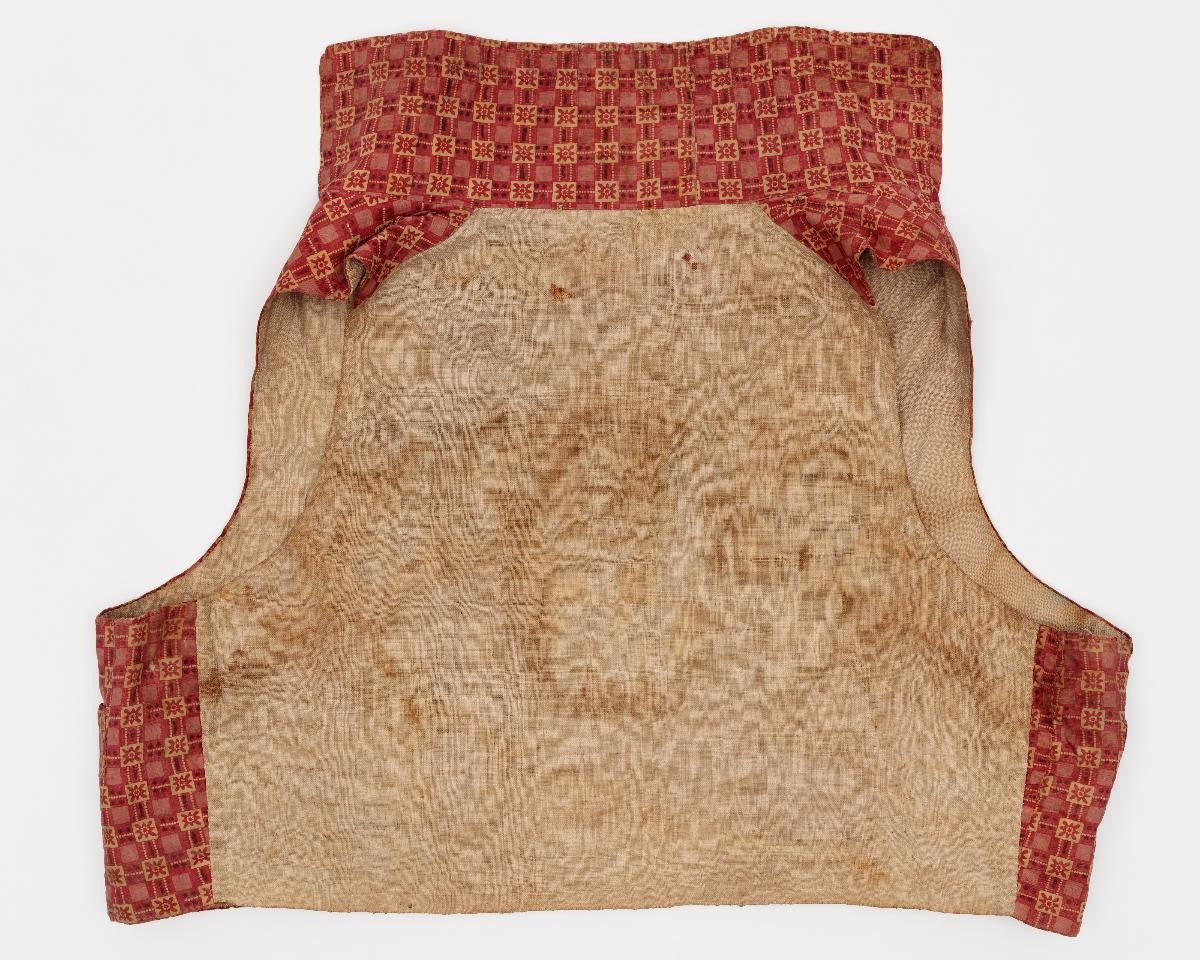
This historical cotton fabric design is inspired by an original Finnish men’s waistcoat from the early 19th century. The pattern features a bold red and yellow checked geometric print with small dotted details and stylised floral square motifs, creating a strong and decorative textile surface associated with Nordic folk costume and late Georgian menswear.
The original waistcoat was made from printed cotton and lined with plain woven linen, reflecting the practical yet visually striking textile traditions used in Finnish folk dress. The rhythmic checked pattern gives the fabric a structured appearance that works especially well for waistcoats, banyans, jackets, accessories, and historical costume projects.
This reconstructed design is well suited for men’s waistcoats, Regency vests, Georgian banyans, Nordic folk costume garments, short jackets, historical accessories, theatre costumes, reenactment clothing, doll clothes, and museum-inspired sewing projects.
Well suited for
– Historical men’s waistcoats and Regency vests
– Georgian banyans and dressing gowns
– Nordic folk costume projects
– Short jackets and historical accessories
– Theatre costumes and reenactment clothing
– Museum reproduction sewing projects
– Doll clothes and miniature historical garments
– Decorative historical interiors
Design & Historical Context
Printed cotton fabrics became increasingly visible in European and Nordic dress during the late 18th and early 19th century. In folk costume traditions, bold geometric prints were often used for waistcoats and decorative garments, combining imported fashion influence with local tailoring and practical construction.
The red and yellow checked layout creates a vivid, rhythmic textile surface especially suitable for waistcoats and tailored garments. The strong grid structure also adapts well for banyans, jackets, accessories, and historical interiors where a bold early 19th-century printed cotton effect is desired.


Reference Person: Elizabeth Fry (1780–1845), English prison reformer and social campaigner. Fry became known for her work improving conditions for women and children in prisons, including education, employment, sewing, and structured reform. Her life belongs to the same late Georgian and Regency-era world in which printed cotton textiles, practical sewing, and social reform all played an important role.