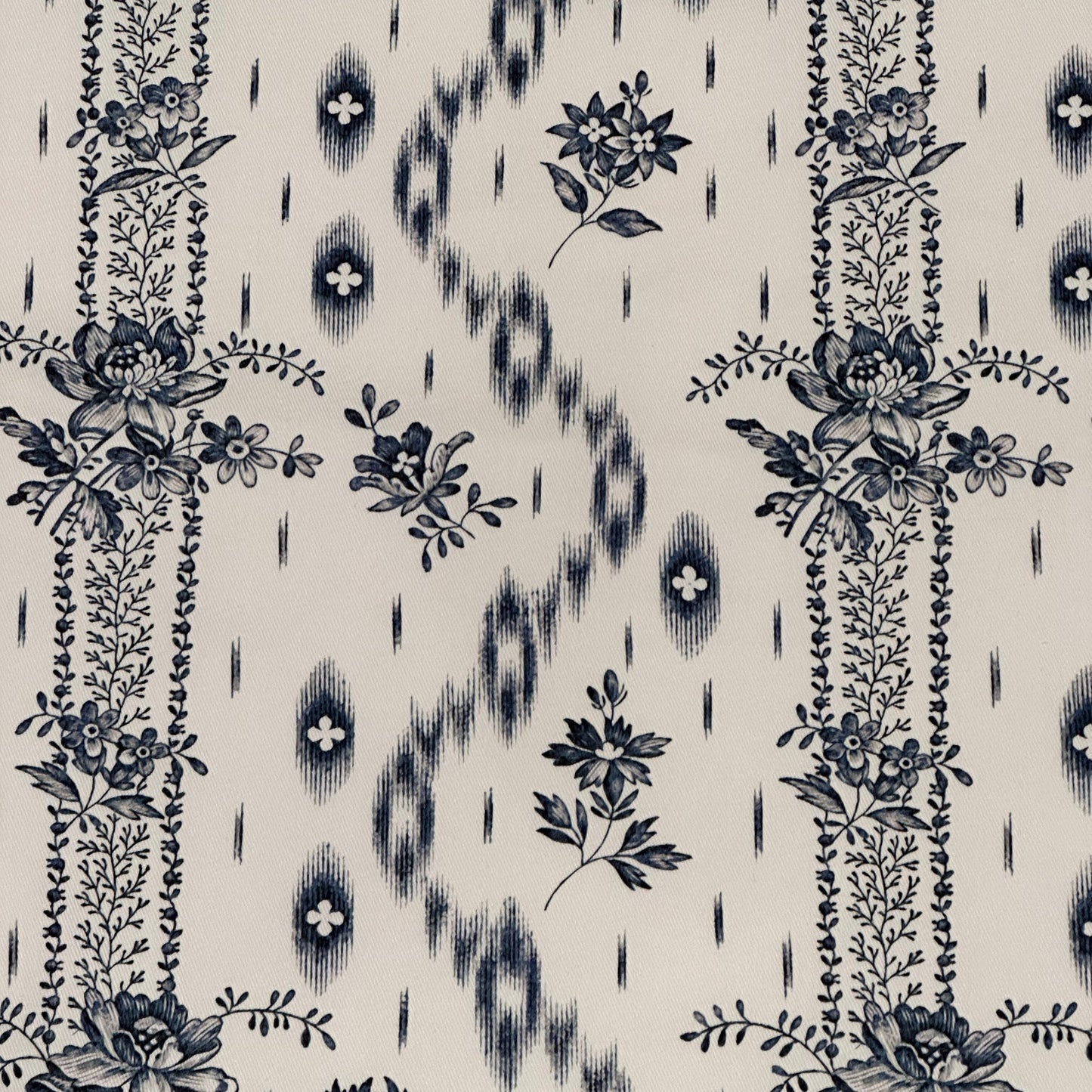
1777 Sholberg Peony - Baltic Blue
1777 Sholberg Peony - Baltic Blue
Design reference nr:
SKU:48940183
Couldn't load pickup availability
This is Copper plate imitation fabric for Upholstery and I have called this one for Peony. The design can be used for curtains and chairs.
The size of the stripe can be changed between 2 cm and 5 cm, depending on the purpose.
The Whirl Wind Blue is a bit greyish blue colour.
Bromley Hall Copper Plate Printed Textiles
The Bromley Hall Printworks, located in Middlesex, England, was a significant early textile printing manufactory that operated from the 1740s until 1823. Initially established by the Ollive family, who were Quakers involved in calico printing since the late seventeenth century, the factory became well-known for its intricate designs and high-quality textiles. The production of copper plate printed textiles at Bromley Hall is particularly notable for its innovative use of the copperplate printing technique, which allowed for detailed and expansive patterns.
Historical Context and Development
The technique of copperplate printing was developed in Drumconda, Ireland, in the early 1750s and quickly spread to England. English calico printers like those at Bromley Hall excelled in producing large-scale monochrome designs using this method. The factory’s operations transitioned to the Talwin and Foster families between approximately 1763 and 1783, during which time it produced a variety of textile designs characterized by their vibrant colors and complex imagery.
Design Characteristics
The textiles produced at Bromley Hall often featured elaborate motifs that combined European styles with exotic influences. For example, one prominent design included long-tailed pheasants set against a backdrop of bold flowers. This design reflects a blend of European textile aesthetics with elements inspired by Indian palampores and Chinese motifs. Such combinations were indicative of the broader trends in textile design during the eighteenth century when manufacturers drew inspiration from various cultural sources.
Pattern Books and Preservation
A key artifact from this period is a pattern book preserved at the Victoria and Albert Museum in London, which contains 144 copperplate designs dating from around 1760 to 1800. While not all designs are represented in this collection, many share similarities with those produced at Bromley Hall. The patterns often included birds and floral decorations that showcased the factory’s specialty in finely drawn avian motifs.
Legacy and Influence
Bromley Hall’s influence on textile design extended beyond its operational years; it contributed significantly to the evolution of printed textiles in England. The combination of artistic inspiration from various cultures along with technical advancements made by English printers positioned Bromley Hall as a leader in the industry during its time.
Share