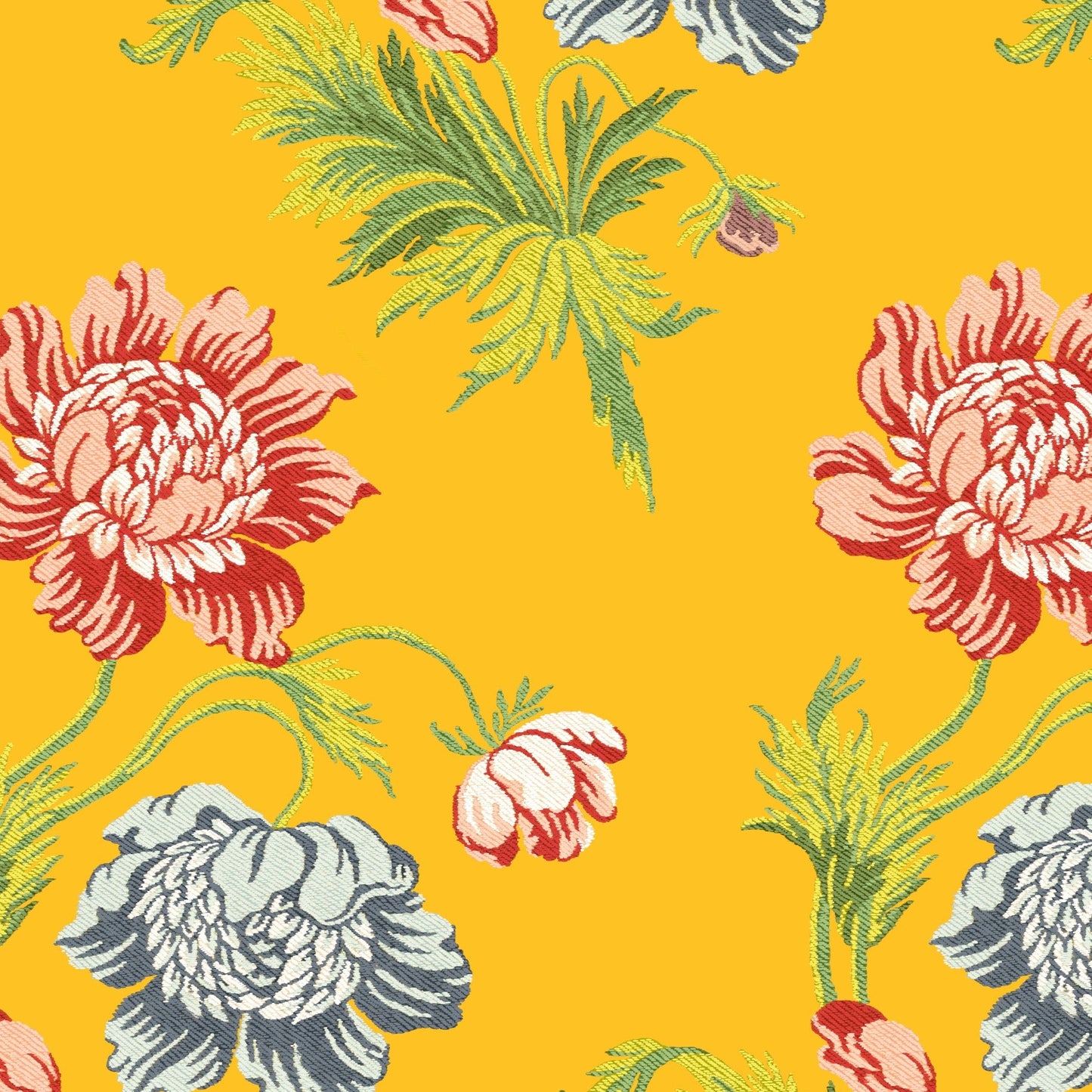
1750 Ulrika Eleonora Gripenberg
1750 Ulrika Eleonora Gripenberg
Design reference nr:
SKU:46500358
Couldn't load pickup availability
Product Description
This reconstructed floral fabric is inspired by fashionable mid-18th-century textiles used among the upper social classes in Sweden-Finland during the rococo period. The design features expressive blossoms in soft red, pink, blue-grey, and green tones placed across a luminous yellow ground, creating a lively yet elegant composition typical of the 1740s–1750s.
The flowing stems and stylised flowers reflect the growing popularity of imported floral textiles, colourful printed cottons, and decorative furnishing fabrics during the late baroque and early rococo era. The composition has been carefully adapted for modern reproduction printing while preserving the spirit and visual rhythm of 18th-century textile design.
Well suited for
Ideal for 18th-century gowns, petticoats, caracos, jackets, stomachers, historical interiors, bed hangings, cushions, decorative panels, and museum-inspired sewing projects. Also suitable for historically inspired modern interiors and creative textile applications requiring strong rococo character and vibrant colour balance.
Design & Historical Context
Around 1750, fashionable noblewomen in Finland followed the broader dress culture of the Swedish realm, where luxurious textiles, floral motifs, and carefully coordinated garments reflected social status and international influence. During this period, colourful imported fabrics and decorative floral compositions became increasingly desirable among the aristocracy and wealthy burgher classes.
This design reflects the lighter and more playful visual language of the rococo period, where movement, asymmetry, botanical inspiration, and luminous colour palettes replaced the heavier aesthetics of earlier baroque fashion.

Ulrika Eleonora Gripenberg
Ulrika Eleonora Gripenberg represents the world of Finnish noblewomen during the rococo period of the mid-18th century. Born into the Finnish-Swedish noble sphere of the 1730s, her name evokes manor houses, refined interiors, imported textiles, and the elegant dress culture that shaped aristocratic life in Sweden-Finland around 1750.
During this period, clothing and textiles functioned not only as practical necessities but also as visible symbols of education, refinement, wealth, and social belonging. Floral fabrics in vivid colours became increasingly fashionable among noblewomen, reflecting both international influence and the softer aesthetic ideals of the rococo era.
This design has therefore been named 1750 Ulrika Eleonora Gripenberg as a tribute to the cultivated textile culture and noble fashion traditions of 18th-century Finland.