1760 Emerentia Polhem
1760 Emerentia Polhem
Design reference nr:
SKU:48800010
Couldn't load pickup availability
French Block Printed Cotton Fabric
Product Description
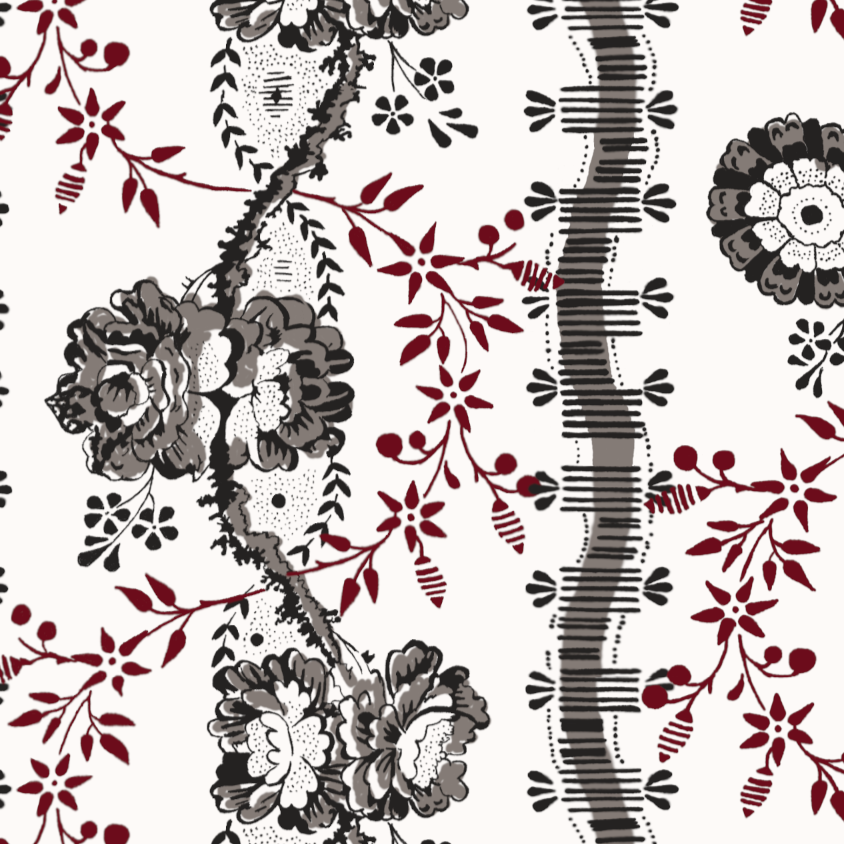
This historical fabric design is inspired by an original European block printed cotton textile dating from approximately 1760–1800, preserved in the Winterthur Museum (Object No. 1956.0056.023). The original textile was woven in plain cotton and decorated using the traditional mordant printing technique, one of the most important textile printing methods of the eighteenth century.
The design features elegant vertical floral garlands framed by delicate stripe elements, creating a refined balance between structure and movement. The combination of soft black floral motifs and deep red accents reflects the sophisticated printed cottons that became highly fashionable throughout Europe during the late Georgian period.
Available on Cotton Linen or Cotton Slub, this reproduction-style design is particularly suitable for historical clothing, museum interpretation projects, historical interiors, and eighteenth-century inspired sewing.
Well Suited For
- 18th century petticoats and printed skirts
- Georgian banyans and dressing gowns
- Pet-en-l’air jackets and informal gowns
- Aprons and workwear accessories
- Men's waistcoats and historical tailoring
- Historical interior textiles and curtains
- Museum reproduction projects
- Living history and reenactment clothing
Design & Historical Context
During the second half of the eighteenth century, printed cottons imported from India and later produced in France and other European countries transformed fashion across Europe. Mordant printing allowed dyers to create durable and richly coloured textiles featuring floral trails, stripes, and exotic botanical motifs.
This design is inspired by a surviving fragment identified as a woven plain cotton textile decorated with block printing in the mordant style. Similar fabrics were used for petticoats, banyans, informal gowns, aprons, furnishing textiles, and fashionable household interiors between approximately 1760 and 1800.
The restrained colour palette and elegant vertical arrangement make this fabric particularly suitable for late eighteenth-century garments while remaining versatile enough for modern heritage-inspired projects.
Historical Reference: Winterthur Museum Object 1956.0056.023, Europe, c.1760–1800. Woven plain cotton, block printed using mordant techniques. The surviving fragment demonstrates the popularity of floral stripe compositions that appeared in both clothing and decorative textiles during the Georgian era.
Reference Person – Emerentia Polhem (1703–1779)
The chosen name for this design is Emerentia Polhem. She was born in 1703 at Stjärnsund in Husby Parish, Sweden, and was the daughter of the renowned inventor and industrialist Christopher Polhem. Emerentia became known as the author of Swenska Rim and belonged to one of Sweden's most influential intellectual families of the eighteenth century. In 1723 she married the district chief Reinhold Galle Rückersköld of Hedemora. Together they became the parents of Anna Maria Rückerschöld, who would later become one of Sweden's most notable writers on household management and domestic economy.
The elegant floral stripes and refined eighteenth-century character of this fabric evoke the world of educated Swedish families during the Age of Liberty. Emerentia Polhem's connection to literature, culture, and one of Sweden's most remarkable families makes her a fitting namesake for this eighteenth-century textile design.