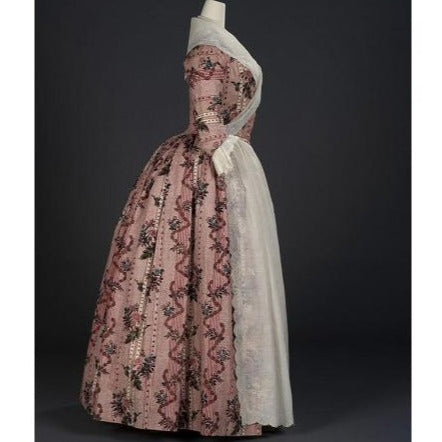
1780 Caroline Herschel
1780 Caroline Herschel
Design reference nr:
SKU:48790040
Couldn't load pickup availability
1780s Chintz Floral Stripe for Italian Gown
Product Description
This late 18th-century floral stripe design is inspired by an original Indian chintz dress preserved in a historical museum collection. The composition combines vertical stripes with floral garlands in red, blue, and soft green, creating a structured yet decorative rhythm typical of export chintz textiles.
Originally produced on the south-east coast of India for the European market, these textiles were highly valued for their colour richness and refined printing techniques. The design reflects the balance between ornament and structure required for open gowns and layered dress construction.
Well suited for
Italian gowns (open dress), robe à l’anglaise, petticoats, bodices, sleeves, and 18th-century garments where a striped floral chintz with historical character is desired.
Design & Historical Context
The original textile was produced using traditional chintz techniques, including mordant painting and resist dyeing on cotton tabby. These fabrics were exported to Europe and widely used in fashionable dress during the late 18th century.
The combination of floral motifs and structured striping reflects how Indian textiles were adapted to European garment construction, particularly for gowns where alignment and placement were essential.

Reference Person
Caroline Lucretia Herschel (1750–1848) was a German astronomer known for her discovery of several comets. Working alongside her brother William Herschel, she became one of the first recognized female scientists of the 18th century.
Her name reflects the intellectual and cultural environment of the late 18th century, where scientific progress and refined material culture existed side by side.