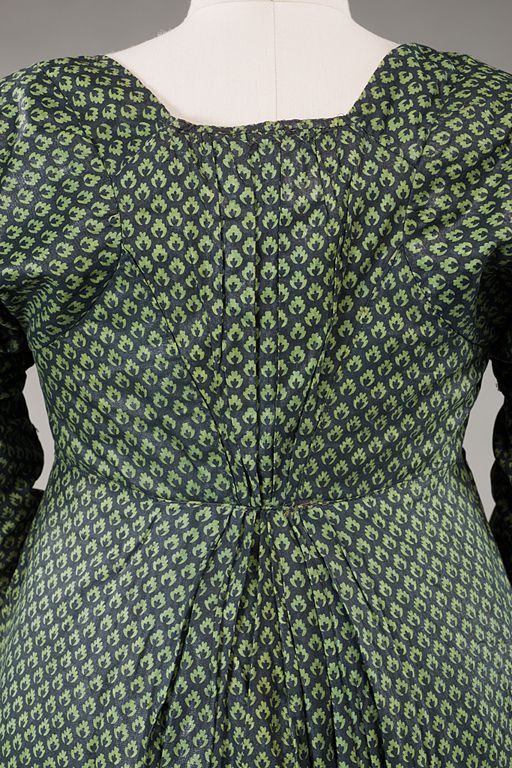
1800 Frances Wright
1800 Frances Wright
Design reference nr:
SKU:48500152
Couldn't load pickup availability
Product Description
This historical cotton fabric design is inspired by an original early 19th-century round gown with long sleeves from the Regency period around 1800. The pattern features small olive-green stylized floral motifs arranged across a deep navy-blue background, creating a bold yet elegant appearance typical of transitional Georgian and Regency fashion.
The olive green and dark blue colour palette reflects the practical yet refined printed cotton fabrics popular for everyday Regency clothing. Small repeating motifs like these were especially well suited for round gowns, historical outerwear, and lightweight garments where comfort and decorative rhythm were equally valued.
Well suited for
Ideal for Regency round gowns, long-sleeved day dresses, transitional fashion c.1790–1800, Spencer jackets, historical capes, reenactment clothing, lightweight historical garments, theatre costumes, historical interiors, and museum reproduction sewing projects.
The original garment was a long-sleeved round gown, a fashionable and practical dress style widely worn during the Regency period for informal daywear and domestic settings.
Design & Historical Context
During the early 1800s, printed cotton fabrics with small repeating motifs became highly fashionable throughout Europe and Britain. Darker backgrounds combined with compact geometric or floral ornamentation created durable and versatile textiles suitable for both practical daily dress and elegant informal fashion.

Reference Person: Frances Wright (1795–1852), Scottish-born writer, lecturer, abolitionist, and social reformer.
Frances Wright, often called Fanny Wright, was a Scottish-born writer, feminist, abolitionist, and social reformer who became widely known in both Britain and the United States during the early 19th century. She advocated for social reform, education, women’s rights, and emancipation, and founded the Nashoba Commune in Tennessee as an experimental utopian community.