1812 Sara Coleridge Myrtille
1812 Sara Coleridge Myrtille
Design reference nr:
SKU:48500155
Couldn't load pickup availability
Product Description
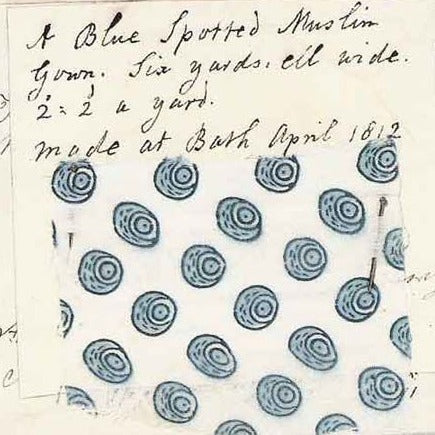
This historical cotton voile fabric design is inspired by an original Regency-era spotted muslin gown dated April 1812. The pattern features delicate blue circular motifs arranged across a soft pale ground, creating the light and airy appearance associated with elegant early 19th-century summer dress fabrics.
The original gown was described as a “Blue Spotted Muslin Gown” and reflects the fashionable preference for lightweight cotton textiles during the Regency period. Small repeating spot motifs like these became especially popular for round gowns, open dresses, morning dress, and informal fashionable daywear.
This reconstructed design works beautifully on cotton voile, where the lightweight semi-sheer fabric enhances the softness and movement typical of Regency silhouettes. Cotton voile is especially suitable for layered gowns, gathered skirts, puff sleeves, fichus, and delicate historical dressmaking projects.
For a full Regency open dress, approximately four metres of fabric is usually recommended depending on the gown construction and sleeve style.
Well suited for
– Regency open dresses and round gowns
– Empire gowns and transitional fashion c.1790–1815
– Lightweight summer dresses and morning gowns
– Historical petticoats and gathered skirts
– Fichus, sleeve details, and delicate accessories
– Theatre costumes and reenactment clothing
– Museum-inspired sewing projects
– Doll clothes and miniature historical garments
Design & Historical Context
During the Regency era, lightweight cotton muslins became highly fashionable throughout Europe. Small dotted and spotted motifs were particularly valued for their refined simplicity and ability to create movement without overwhelming the silhouette.
The original reference notes describe the fabric as a “Blue Spotted Muslin Gown” made in Bath in April 1812. During the Regency era, Bath was one of Britain’s most fashionable spa and social cities, closely associated with elegant muslin gowns, promenades, assemblies, and refined daywear.
The original spotted muslin gown reflects the neoclassical taste of the period, where elegant textile surfaces, soft drape, and delicate repeating patterns became central elements of fashionable women’s dress. This reconstructed version preserves the calm rhythm and airy elegance associated with Regency cotton voile fabrics.

Reference Person: Sara Coleridge (1802–1852) was an English author and translator. She translated works from Latin and medieval French and later became known for her poetry and imaginative storytelling. Her literary world reflects the same refined Regency-era culture associated with elegant muslin gowns, delicate cotton textiles, and early 19th-century domestic life.