1790 Greta Setterberg
1790 Greta Setterberg
Design reference nr:
SKU:48790041
Couldn't load pickup availability
Product Description
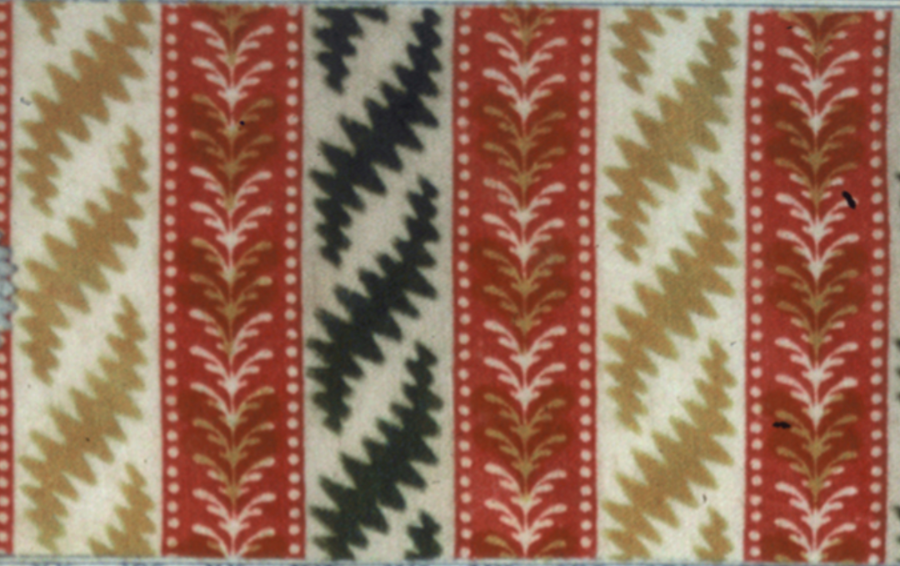
This design is inspired by an 18th-century French sample book for printed textiles featuring decorative vertical stripe arrangements in red, black and warm lapis-inspired tones. The rhythmic stripe composition creates a bold yet balanced expression characteristic of fashionable late 18th-century printed cottons.
The structured stripe layout reflects the decorative precision and colour sophistication associated with French textile production during the late 18th and early 19th century. Inspired by historical salesman sample cards, the design preserves the visual language of textile trade, pattern presentation and colour experimentation used within European fabric commerce.
Well suited for
Well suited for petticoats, aprons, jackets, waistcoats, banyans, historical workwear, museum interpretation, reenactment garments and historically inspired sewing projects. The vertical stripe layout works beautifully for structured 18th-century silhouettes and decorative garment panels.
Design & Historical Context
The original inspiration comes from a French salesman’s textile sample card dated to the late 18th and early 19th century. The printed cotton samples were produced using both roller printing and block printing techniques, including lapis resist methods associated with rich ultramarine-inspired colour effects. Textile sample books like these were important tools within European fabric trade and documented fashionable stripe combinations, mourning textiles and decorative colour variations used throughout the period.

Margaretha (Greta) Zetterberg, born in 1733, was a Finnish weaver and textile pioneer associated with linen preparation and textile craftsmanship in Finland. She studied textile production in Stockholm and later brought advanced knowledge of linen preparation back to Borgå.