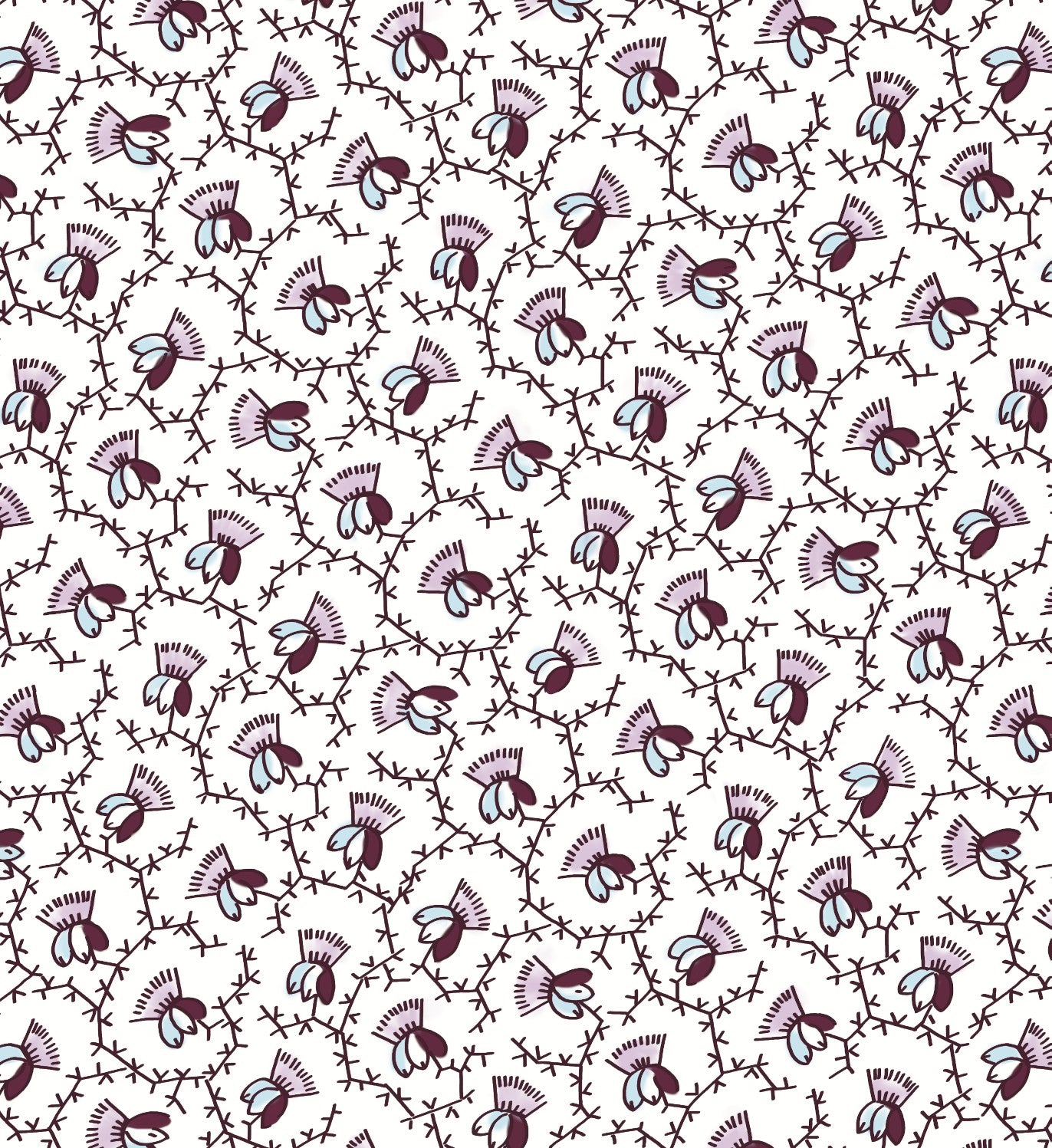
1808 Lady Caroline Lamb - Berry Shade
1808 Lady Caroline Lamb - Berry Shade
Design reference nr:
SKU:48500307
Couldn't load pickup availability
1808 Regency Thistle Cotton
Product Description
This historical cotton fabric design is inspired by an original English roller-printed cotton day dress dating to around 1808, during the early Regency period. The textile features delicate purple thistle motifs arranged across a soft white background, creating a refined and airy appearance typical of transitional fashion between the late Georgian and Regency eras.
The design is printed on cotton fabric and is well suited for Regency dresses, round gowns, transitional gowns, historical costume projects, doll clothes, historical interiors, museum reproduction projects, and early 19th-century sewing. The elegant purple and soft plum colour palette reflects the fashionable lightness and natural botanical inspiration popular during the Napoleonic and Empire period.
Well Suited For
Ideal for Regency gowns, round gowns, chemisettes, pelerines, historical dressmaking, lightweight historical interiors, reenactment clothing, theatre costumes, Jane Austen-inspired garments, and museum-inspired sewing projects. Also suitable for doll-scale historical clothing and educational textile reproduction work.
Design & Historical Context
The original dress was exhibited in both Napoleon & the Empire of Fashion in Milan and The Empire of Fashion at Rueil-Malmaison, highlighting its importance within early 19th-century fashion history. Roller-printed cotton fabrics with small repeating floral and botanical motifs became increasingly fashionable during the Regency period, reflecting the era’s preference for lighter silhouettes, delicate decoration, and neoclassical elegance.

Lady Caroline Lamb (1785–1828) was a British aristocrat, novelist, and one of the most talked-about women of the Regency era. She became famous for her dramatic relationship with Lord Byron, whom she described as “mad, bad, and dangerous to know.” Her bold personality, literary work, and connection to fashionable high society made her one of the most recognisable cultural figures of early 19th-century Britain.
This textile reflects the elegant simplicity and refined botanical styling associated with fashionable Regency dress during the years surrounding 1808, when lightweight cotton gowns and delicate roller-printed fabrics became central elements of women’s fashion throughout England and Europe.