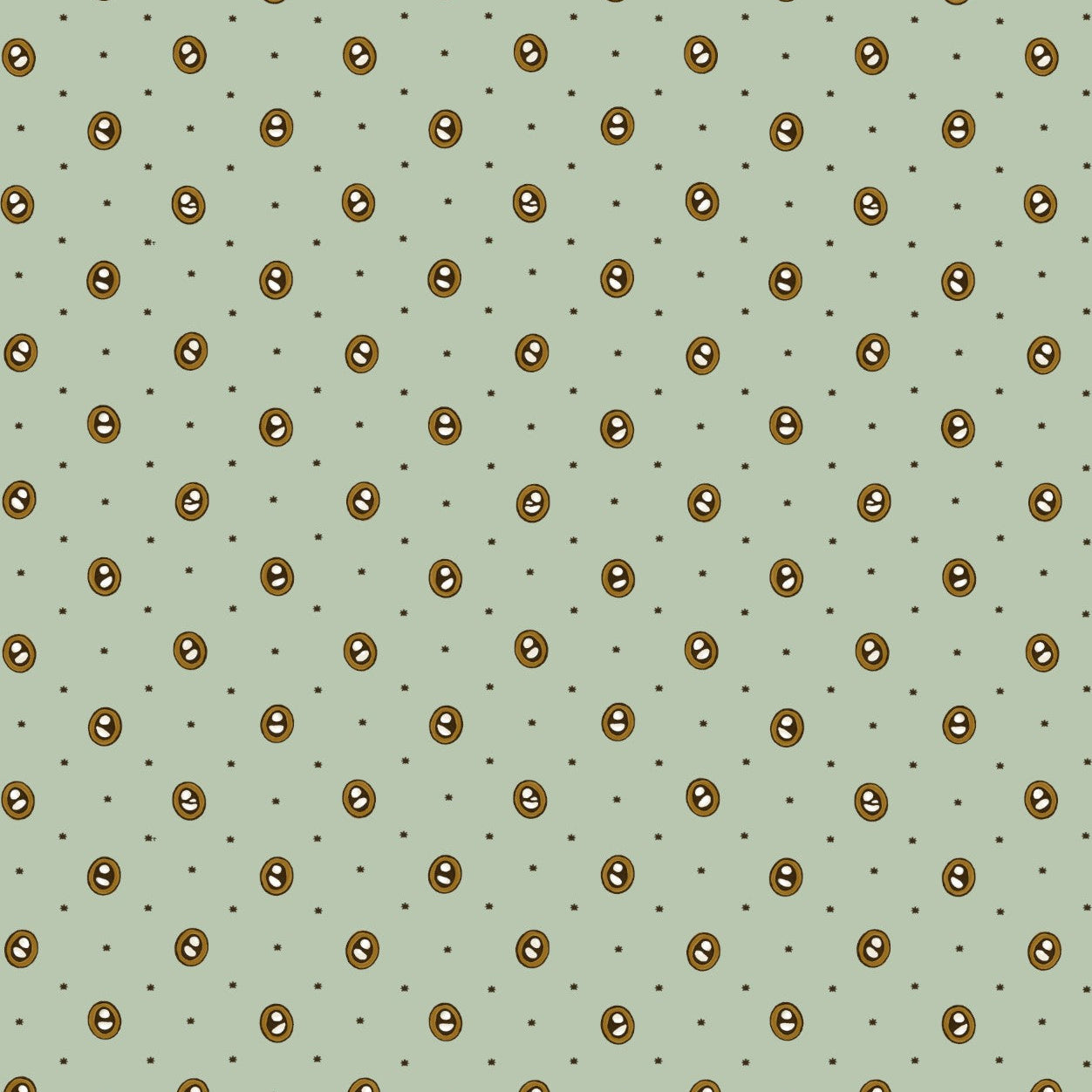
1807 Karen Anker
1807 Karen Anker
Design reference nr:
SKU:48800017
Couldn't load pickup availability
Norwegian Regency Fabric Inspired by an Early 19th Century Dress
Product Description
1807 Karen Anker is inspired by an original Norwegian dress dated between 1800 and 1810 in the collection of the National Museum of Norway. The surviving garment is made from printed cotton with a small-scale geometric pattern consisting of warm ochre-coloured medallions scattered across a soft neutral ground.
This reproduction captures the restrained elegance that characterised everyday and semi-formal Regency fashion in Scandinavia during the early nineteenth century. The delicate repeating motif creates visual interest without overpowering the garment, making it particularly suitable for historically inspired dresses, pelisses, aprons, children's clothing and other projects from the Empire and Regency periods.
Well Suited For
- Regency dresses (c. 1800–1815)
- Empire gowns
- Pelisses and lightweight outerwear
- Historical aprons and accessories
- Children's clothing for living history and theatre
- Museum reproduction projects
- Historical costume sewing
- Doll clothes and miniature costumes
- Historic-inspired interiors and decorative textiles
Design & Historical Context
The design is named after Karen Anker (1789–1849), a member of one of Norway's most prominent families during the Napoleonic era. The pattern is based on an original dress preserved in the Norwegian National Museum and dated to the first decade of the nineteenth century.
According to museum records, the original garment was constructed from printed cotton in plain weave with linen and cotton linings. The dress measures 132 cm in length and reflects the elegant simplicity that became fashionable throughout Europe during the Regency and Empire periods. Small repeating motifs such as these were particularly popular for day dresses, offering a refined appearance while remaining practical and wearable.
The original museum garment survives as an important example of early nineteenth-century Scandinavian dress and textile design. This reproduction reinterprets the historical pattern for modern historical sewing, reenactment, theatre productions and heritage-inspired projects.

Karen Anker (1789–1849) was the daughter of the Norwegian statesman and landowner Peder Anker of Bogstad. In 1807, at the age of eighteen, she married Herman Wedel-Jarlsberg, one of Norway's most influential political figures of the early nineteenth century.
Raised in one of Norway's leading families during the Regency and Napoleonic era, Karen Anker represents the elegant yet understated style associated with the Norwegian upper classes. Her name is remembered today through her connection to Bogstad Manor and the Wedel-Jarlsberg family, both important parts of Norway's cultural history.