1769 Anna Christina Warg
1769 Anna Christina Warg
Design reference nr:
SKU:48790015
Couldn't load pickup availability
French Floral Fabric – Robe à la Française Design
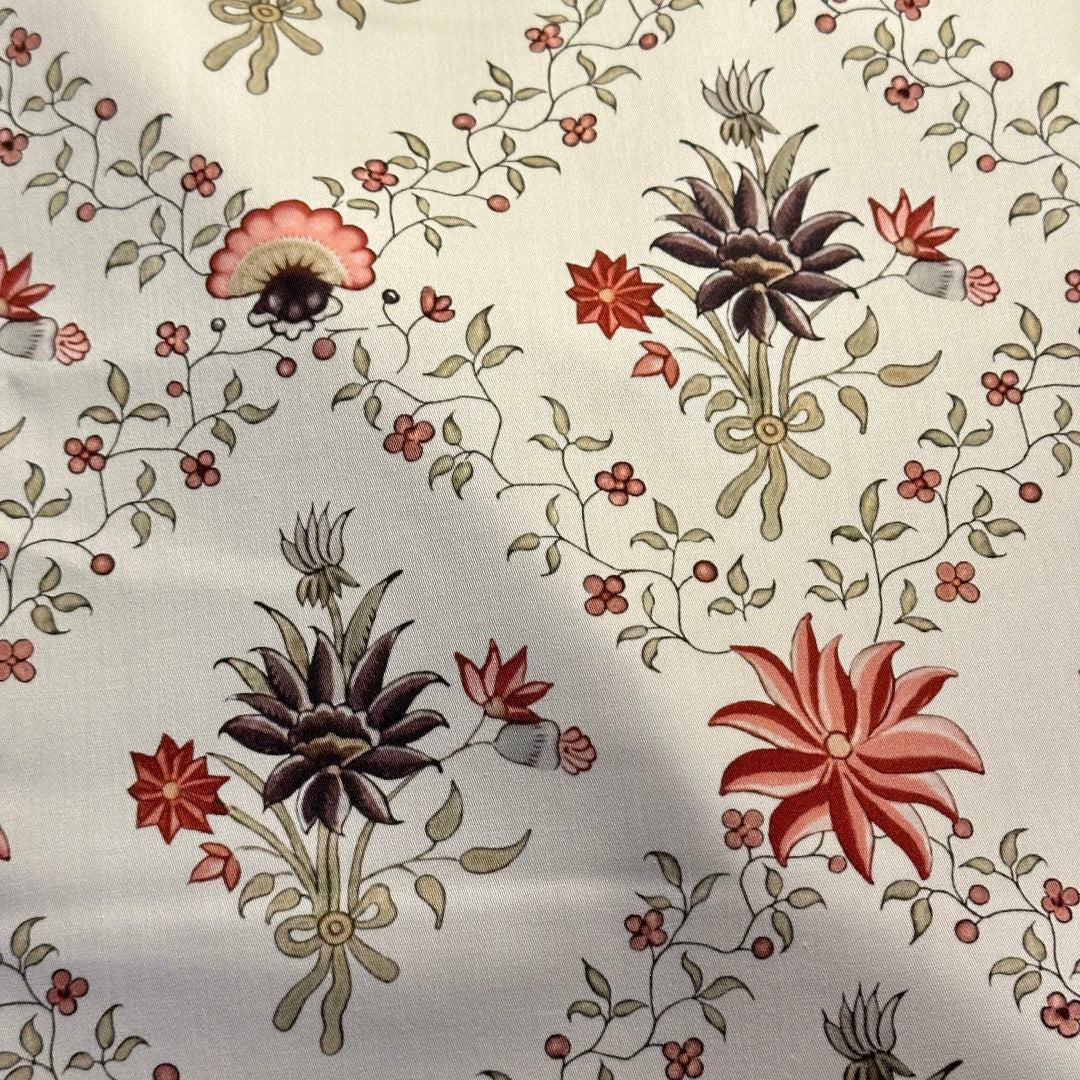
This 1770 French floral fabric is inspired by an original eighteenth-century textile used for a Robe à la Française. The design features delicate floral sprays arranged within elegant diamond-shaped garlands, a characteristic motif of late Rococo fashion.
The balanced floral layout makes this historical reproduction fabric especially suitable for Robe à la Française gowns, eighteenth-century petticoats, Pet-en-l'air jackets, stomachers, and other historical clothing projects. The repeating pattern unfolds beautifully across wide skirt panels, creating the graceful visual rhythm associated with French fashion of the 1770s.
Soft coral flowers, trailing vines, and decorative floral motifs are set against a light ground, reflecting the refined aesthetic of eighteenth-century printed cotton textiles. The design combines historical accuracy with timeless elegance, making it well suited for historical dressmaking, costume making, reenactment, museum interpretation, and period-inspired interiors.
Perfect for:
- Robe à la Française
- 1770s gowns
- Rococo dressmaking
- Petticoats
- Pet-en-l'air jackets
- Historical reproduction clothing
- Reenactment and living history
- Eighteenth-century interiors
Design & Historical Context
Based on an original French textile dating to approximately 1770, this design represents the lighter and more refined phase of Rococo textile design. Floral sprays enclosed within diamond-shaped vine networks became highly fashionable during the 1770s and remained popular throughout the late eighteenth century. The pattern is particularly associated with the elegant silhouettes and sweeping skirts of French court fashion.

Anna Christina Warg (1703-1769), better known as Caisa Warg, published in 1755 the first edition of the cookbook classic Hjelpreda in the household for young ladies' timber. Caisa came from a well-known family of merchants and officials in Örebro. Her father was a councilor. She moved away from home early to support herself. Eventually she became a housewife (housekeeper) in well-to-do Stockholm families.