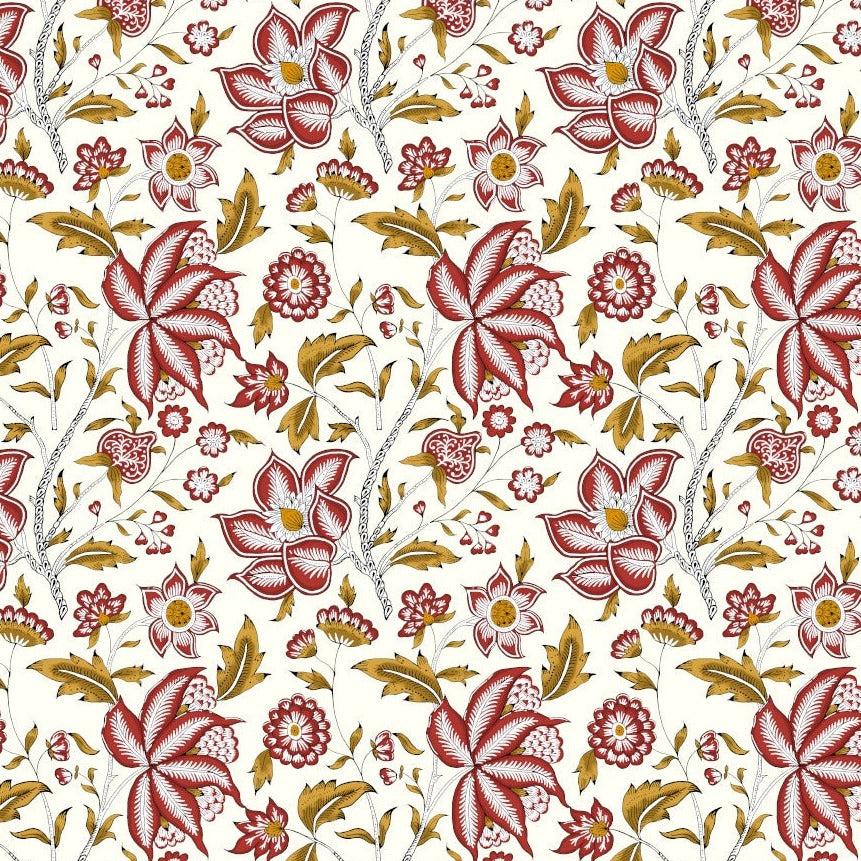
1770 Eva Ekeblad
1770 Eva Ekeblad
Design reference nr:
SKU:48790108
Couldn't load pickup availability
18th-Century Floral Cotton Fabric – Historic Swedish Design, Perfect for Banyan
Product Description
This elegant floral fabric features a richly detailed 18th-century pattern with stylised blossoms, delicate stems, and scrolling leaves arranged in a balanced, flowing composition. The warm red florals are complemented by golden ochre foliage and fine black linework, all set against a soft light ground that enhances both clarity and depth.
The design has a distinctly historical rhythm, with motifs scaled to read beautifully across large garment panels. It drapes gracefully and carries enough visual interest to stand on its own, making it especially striking in relaxed yet refined garments.
This fabric is exceptionally well suited for a Banyan, where the generous cut allows the pattern to unfold naturally and display its full decorative impact. It also works beautifully for other 18th-century garments and interiors where authenticity and elegance matter.
Ideal for:
- Banyans and informal 18th-century robes
- Robe à l’anglaise and other period gowns
- Dressing gowns, wrappers, and statement garments
- Historically inspired interiors and textile projects

Eva Ekeblad (née De la Gardie) was a Swedish countess, salon hostess, agronomist, and scientist. She was widely known for discovering a method in 1746 to make alcohol and flour from potatoes, allowing greater use of scarce grains for food production and significantly reducing Sweden’s incidence of famine.