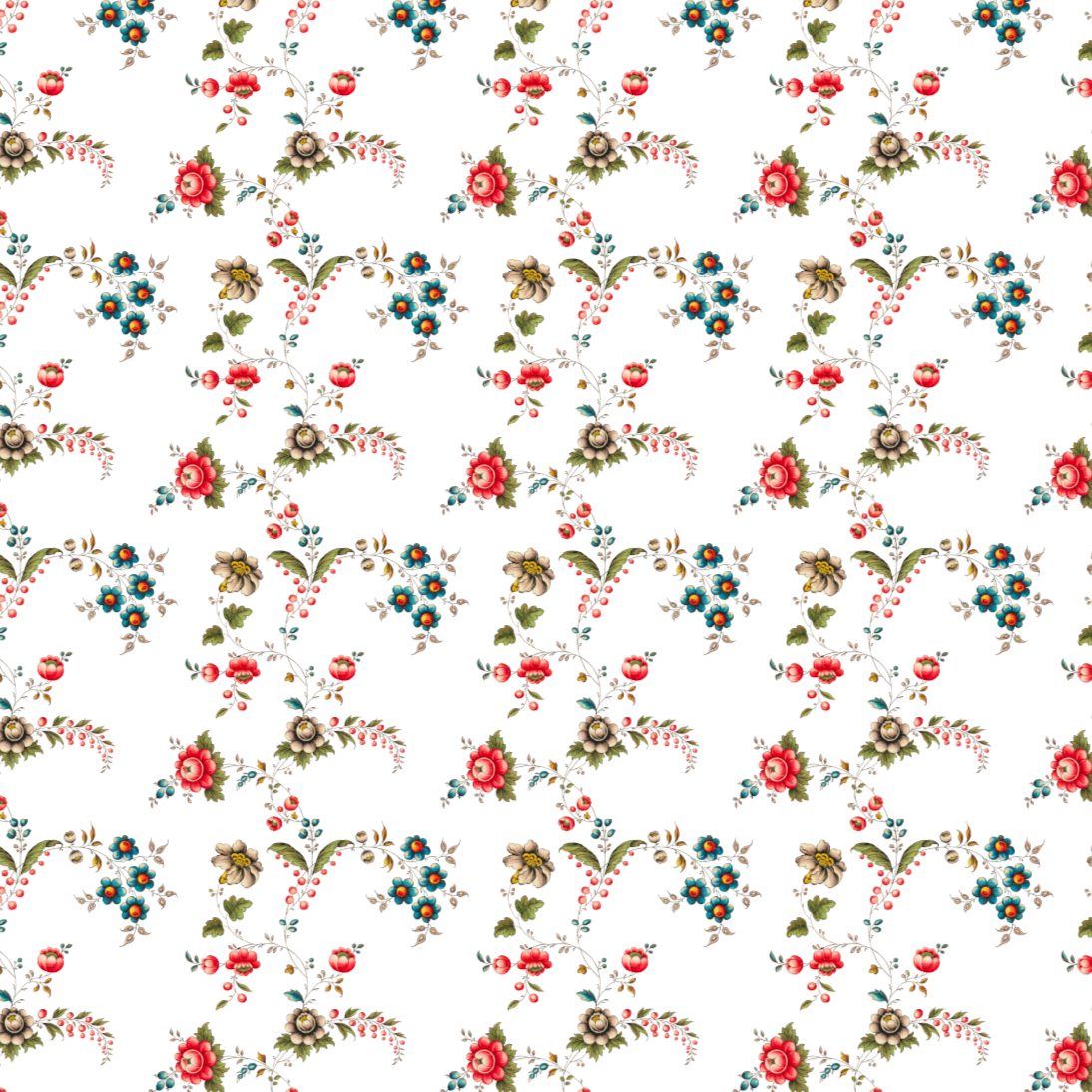
1760 Maria Kristina Kiellström
1760 Maria Kristina Kiellström
Design reference nr:
SKU:48800044
Couldn't load pickup availability
French Printed Cotton Fabric
Product Description
This historical fabric design is inspired by an original French design for printed cotton dating from approximately 1760–1790. The surviving artwork, created in pen and ink with brush and watercolor on paper, was intended as a textile printing design and reflects the elegant floral compositions that became fashionable throughout Europe during the late eighteenth century.
The pattern features graceful vertical floral garlands framed by decorative stripe elements, creating a balanced and sophisticated appearance characteristic of Georgian textile design. The combination of delicate floral motifs and structured stripes made fabrics such as these suitable for both fashionable dress and domestic interiors.
Printed on Cotton Linen, this design is well suited for historical clothing, museum interpretation projects, 18th century petticoats, aprons, banyans, waistcoats, jackets, and eighteenth-century inspired sewing projects.
Well suited for
- 18th century petticoats and printed skirts
- Georgian banyans and dressing gowns
- Pet-en-l’air jackets and informal gowns
- Aprons and historical workwear accessories
- Men’s waistcoats and historical tailoring
- Jackets and short gowns
- Museum reproduction and living history projects
Design & Historical Context
The original drawing is attributed to France and dates to approximately 1760–1790. Today it survives as a design for printed cotton, offering a rare glimpse into the creative process behind the production of fashionable eighteenth-century textiles.
Printed cottons were widely used in the second half of the eighteenth century for garments such as petticoats, banyans, aprons, waistcoats, jackets, and informal gowns. The vertical floral stripe layout gives the fabric a refined structure while still keeping the light, decorative character associated with late Georgian printed cottons.

Maria Kristina Kiellström (1744–1798), known as Maja Stina, was born in Stockholm to a poor working‑class family. Her father had served in the artillery but left due to illness, and after her mother died when she was five, the family struggled. She began working young and later became a silk worker in Stockholm’s expanding silk industry.
She is best remembered as the woman who inspired Carl Michael Bellman’s character Ulla Winblad, though modern research stresses that Bellman largely invented the fictional figure. While Ulla Winblad became one of Swedish literature’s most famous women, the real Kiellström lived a far more difficult life shaped by poverty, labor, and strict social norms in eighteenth‑century Stockholm.
In 1767 she drew public attention when she was brought before authorities for wearing a fashionable red silk garment, which violated Sweden’s sumptuary laws at the time.