1837 Anna Lisel - Pineus
1837 Anna Lisel - Pineus
Design reference nr:
SKU:48800083
Couldn't load pickup availability
1820–1858 Pinéus Floral Cotton Print – Gothenburg, Sweden
A Historical Swedish Calico Print Inspired by a Surviving Apron from Mockfjärd
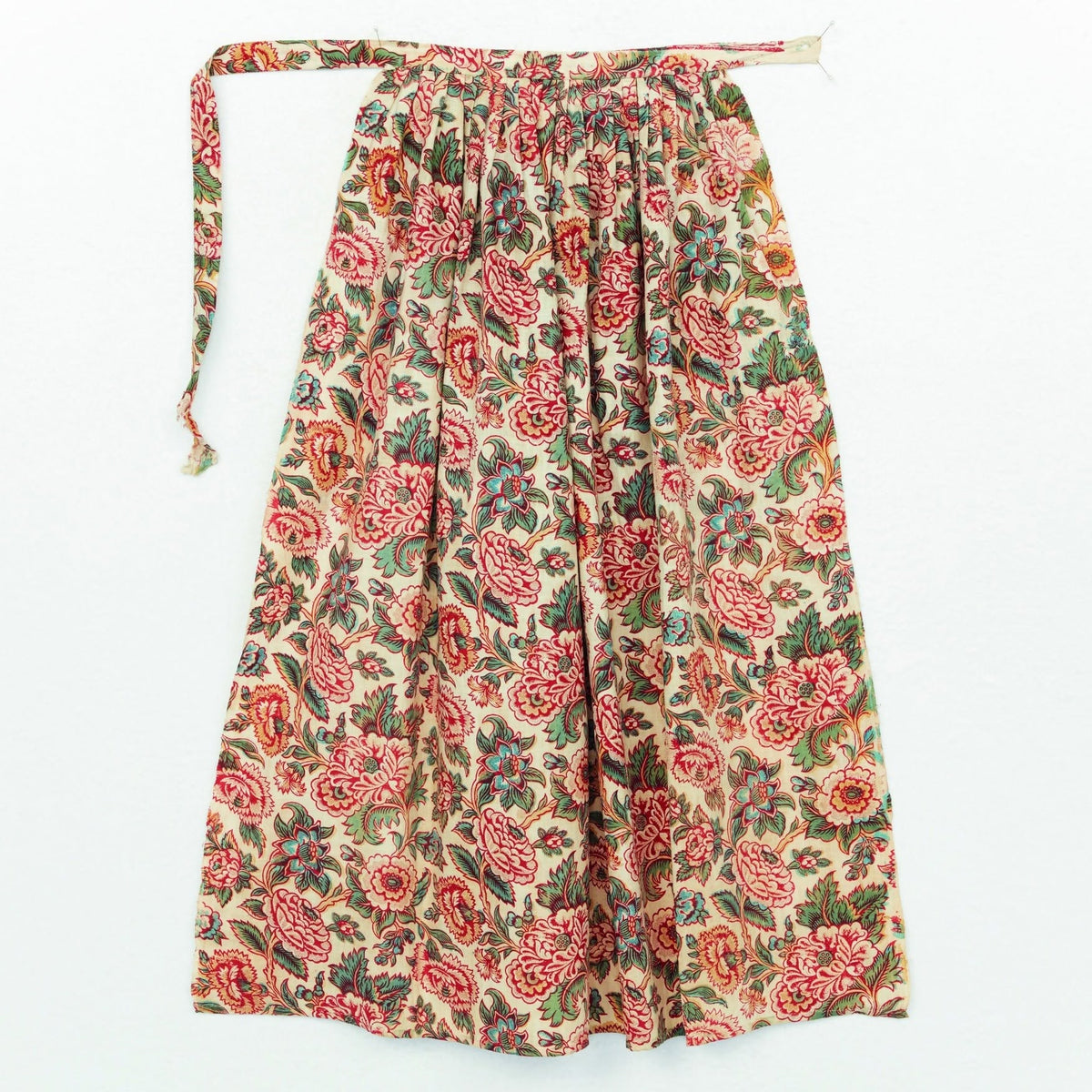
This richly coloured floral fabric is inspired by a surviving historical apron from Mockfjärd, Dalarna, Sweden, preserved in a Swedish museum collection and documented through DigitaltMuseum.
The original apron belonged to Anna Lisel, born in 1857, who lived in Mockfjärd and worked as a bobbin lace maker. Although the precise date of the apron and its fabric remains uncertain, the floral pattern has an intriguing connection to Sweden's early textile-printing industry.
According to the museum documentation, an identical pattern has been identified on a textile attributed to Pinéus calico-printing works in Gothenburg, suggesting that the design may originate from the first half of the 19th century.
The Pinéus Calico-Printing Works
In 1819, Isaac Pineus (1781–1837) received permission to establish a calico-printing works at Ericsberg, near the Mölndal River in Gothenburg.
The factory produced printed cotton textiles during a period when colourful floral fabrics were increasingly popular for dresses, aprons and other garments.
Following Isaac Pineus's death in 1837, his widow, Betty Pineus (née Holländer), continued operating the business until 1858.
Historical records indicate that the factory purchased dyes, printing chemicals and pearwood, a material traditionally used for carving wooden printing blocks. These records provide a fascinating connection to the techniques used in early Swedish textile printing.
The Floral Design
The pattern features an abundance of stylised flowers, scrolling stems and richly detailed foliage.
Deep madder reds, soft coral pinks, turquoise blues, leafy greens and warm golden yellows create a lively composition against a natural ivory background.
One particularly interesting feature of the surviving print is the apparent interaction between the yellow and blue pigments. Some green areas may have been created by overprinting blue onto yellow, a technique associated with traditional multicolour textile printing.
Small variations in colour registration give the original textile its distinctive historical character.
Suggested Uses
The design is particularly suitable for:
- Traditional Swedish folk costumes (folkdräkter)
- Regional and local heritage costumes (bygdedräkter and hembygdsdräkter)
- Historical aprons and traditional costume accessories
- Reconstruction and restoration of historical garments
- Petticoats, skirts and other period garments
- Historical textile and sewing projects
The generous floral composition makes this fabric especially attractive for a traditional gathered apron, inspired by the surviving example from Mockfjärd.
Historical Reference
Original object: Floral printed apron, Mockfjärd, Dalarna, Sweden
Former owner: Anna Lisel (born 1857), bobbin lace maker
Pattern attribution: Associated with Pinéus calico-printing works, Gothenburg
Historical period: Approximately 1820–1858 (attributed pattern)