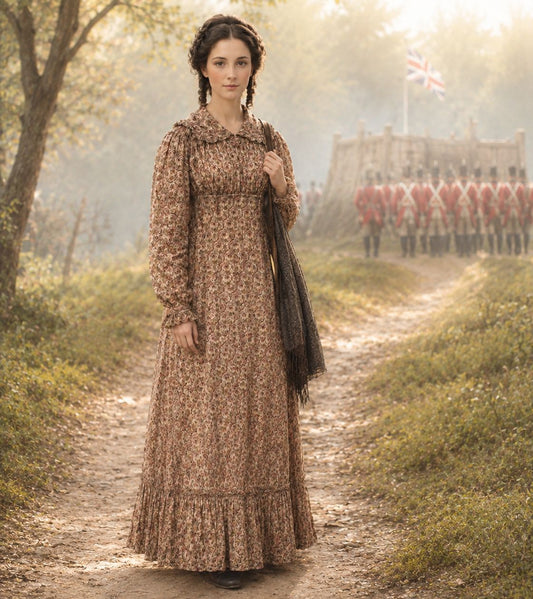
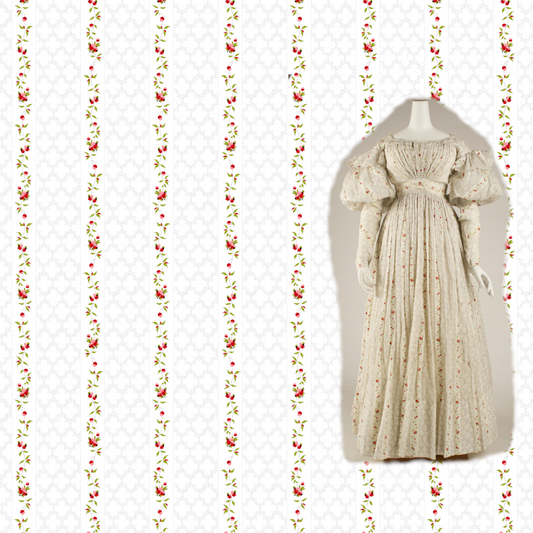
The Regency back-closing gown was a fashionable dress style worn between approximately 1815 and 1825, during the late Regency and early Romantic period. Unlike earlier Empire gowns from around 1800–1810, which typically closed in the front with drawstrings or ties, this later style was constructed to fasten at the back.
This change in closure reflects a broader shift in fashion during the 1810s. Dresses became more structured, with carefully fitted bodices and a smoother front silhouette. The back-closing construction created a cleaner appearance across the bust and waistline, which was considered more refined and elegant for fashionable dress.
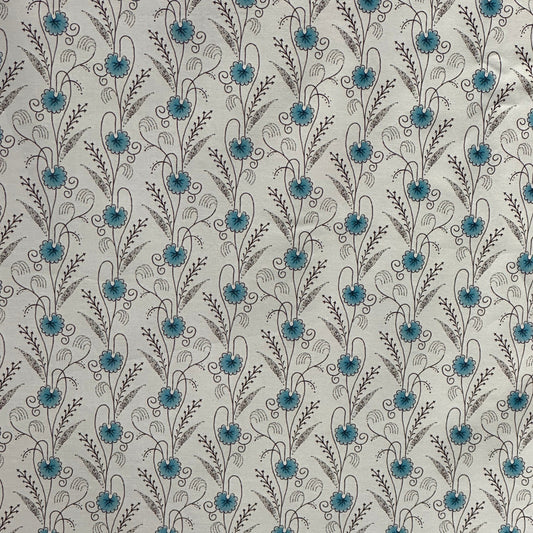
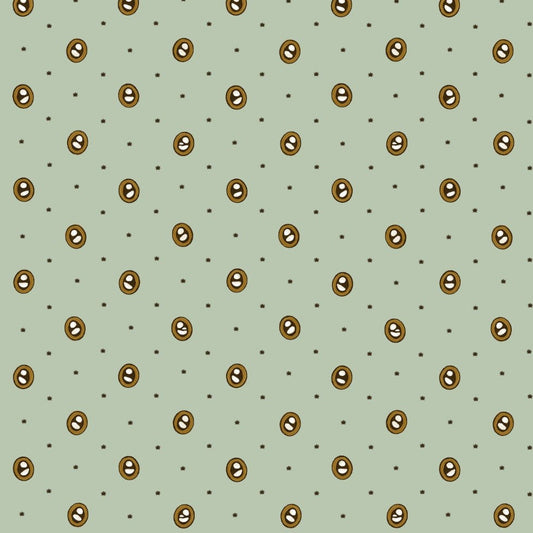
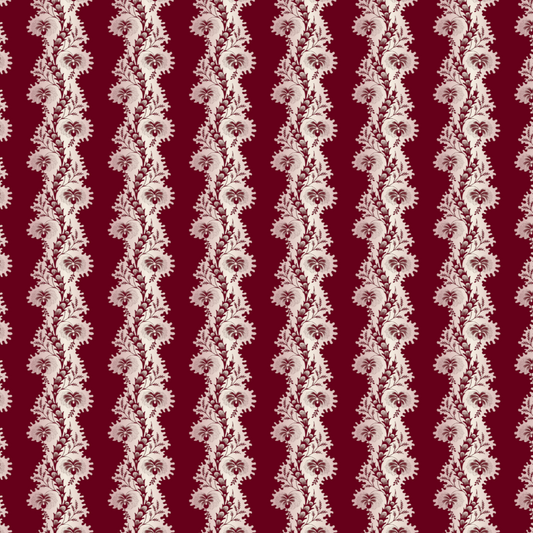
These gowns retained the characteristic high Empire waistline, but skirts gradually became slightly fuller and sleeves began to grow larger toward the 1820s. Fabrics commonly used for Regency dresses included printed cotton muslin, fine cotton, silk, and lightweight wool, making the style suitable for both daywear and more formal occasions.
Today, Regency back-closing gowns are well known among historical dressmakers and reenactors because their construction differs from the earlier drawstring-front Empire dresses of the early 19th century.

Recommended Sewing Pattern
Looking for a historically inspired back-closing Regency gown pattern?
View Pattern →