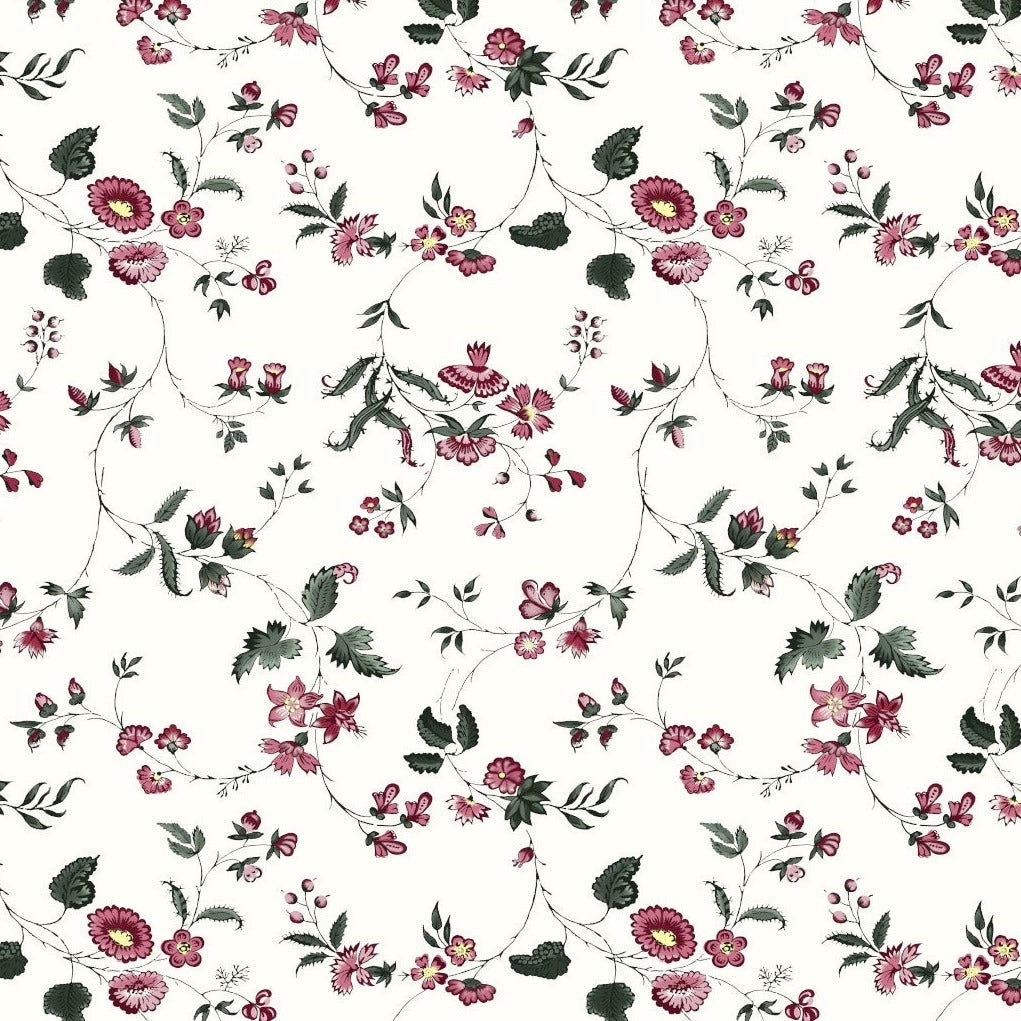
1775 Virginia Manderström - Red
1775 Virginia Manderström - Red
Design reference nr:
SKU:48790138
Couldn't load pickup availability
1775 Floral Vine Woodblock
Inspired by an original late 18th century British woodblock printed textile dated approximately 1775–1800, this delicate floral vine design reflects the lightness and elegance that became increasingly fashionable during the final decades of the Rococo and early Neoclassical eras. Flowing botanical garlands, airy movement, and scattered blossoms create a refined yet natural rhythm across the surface.
Originally produced as a cotton furnishing and decorative textile, designs of this type were commonly used for gowns, aprons, bed textiles, quilts, lightweight jackets, waistcoats, and elegant domestic interiors. The softly trailing floral composition captures the growing European fascination with nature, botanical studies, and romantic garden aesthetics during the late 18th century.
Well suited for
Perfect for aprons, Robe à l’Anglaise gowns, waistcoats, jackets, petticoats, bed hangings, quilts, historical interiors, and refined 18th century sewing projects. The design works beautifully for both historical reproductions and softer modern cottage-style interpretations inspired by Georgian and Gustavian fashion.
Especially suitable for Cotton Voile, Cotton Poplin, Cotton Cretonne, and lightweight furnishing fabrics where the flowing vine structure and small-scale floral repeat can fully unfold with elegance and movement.
Design & Historical Context
During the late 18th century, British and European woodblock printed cotton textiles became increasingly sought after among both aristocratic and upper-middle-class households. Floral vine patterns such as this reflected contemporary tastes for lighter silhouettes, pastoral beauty, botanical illustration, and imported printed cottons inspired by Indian textile traditions.
The gentle asymmetry and delicate floral arrangement are characteristic of transitional late Rococo design, while the cleaner spacing and naturalistic flow hint toward the balanced aesthetics that would later define Neoclassicism and the Regency period. Textiles of this type were often used in both fashionable dressmaking and elegant domestic furnishing schemes throughout Europe.

Reference Person:
Virginia Charlotta “Charlotte” Manderström, born Duvall in March 1748, was a Swedish court lady and one of the close companions of Queen Sofia Magdalena of Sweden. Contemporary sources describe her as one of the Queen’s favourites, admired for her elegance, presence, and participation in the theatrical and cultural life of the Gustavian court.
She frequently performed leading roles in the popular amateur theatre productions arranged within court circles, reflecting the refined artistic and intellectual atmosphere associated with late 18th century aristocratic life in Sweden.