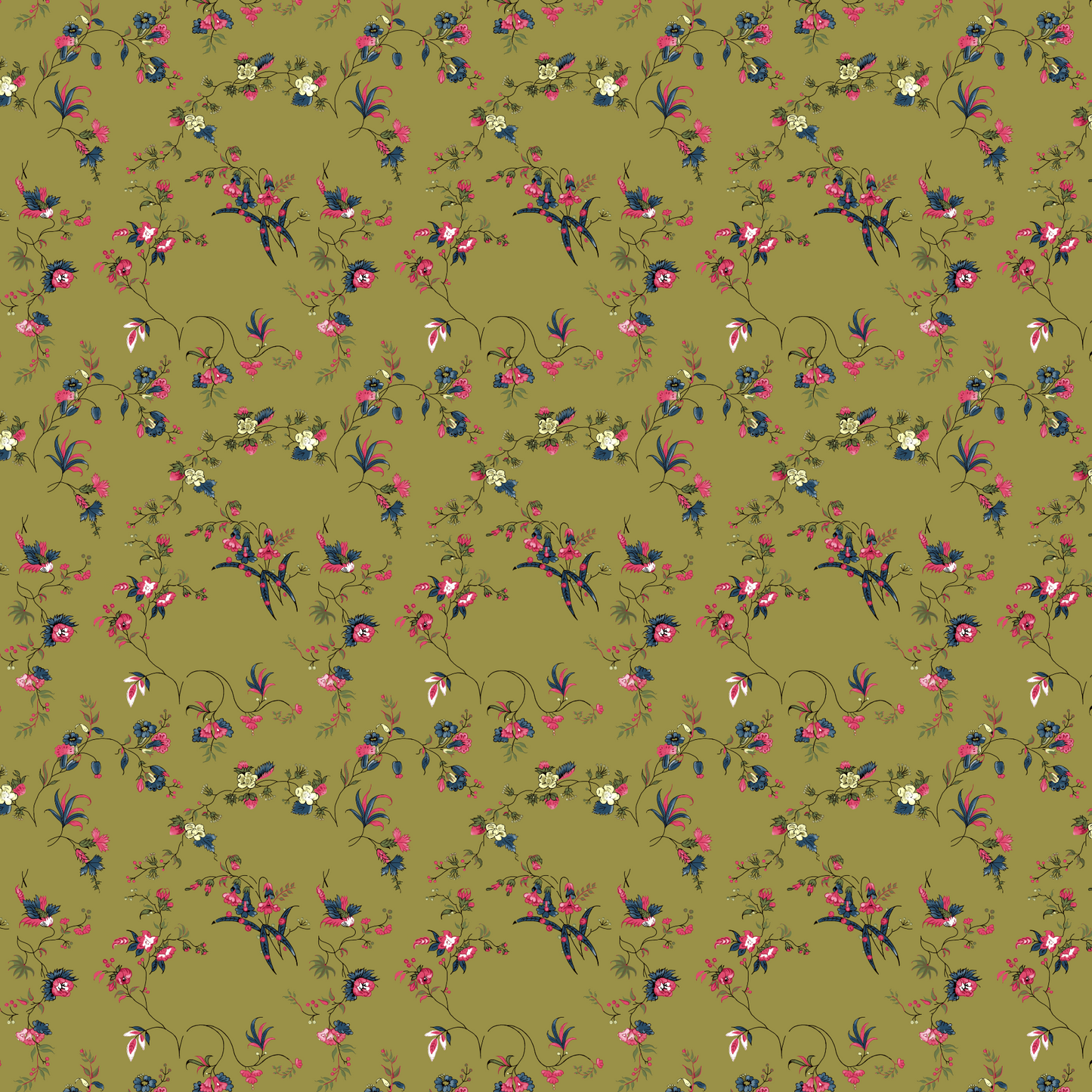
1785 Catharina Juliana Eckerman - Tangy Dill
1785 Catharina Juliana Eckerman - Tangy Dill
Design reference nr:
SKU:48800227
Couldn't load pickup availability
Late 18th-Century Floral Design, c. 1785–1795
Product Description
This elegant late 18th-century floral cotton fabric is inspired by English block-printed textiles from the Georgian era, featuring delicate trailing flowers, airy stems, and refined botanical motifs arranged across a soft green background. The balanced composition creates a graceful and sophisticated textile surface characteristic of fashionable cotton fabrics from the 1780s and 1790s.
The original inspiration comes from a late 18th-century English floral cotton dress fabric dating to c. 1785–1795. Such lightweight floral textiles became highly fashionable for elegant daywear, open gowns, petticoats, caps, fichus, and decorative accessories during the final decades of the Rococo and Georgian period.
Place of origin: England, United Kingdom
The soft green ground gives the design an elegant lightness while allowing the floral motifs to remain visually delicate and refined. The flowing repeat works especially beautifully across gathered skirts, loose outer garments, and lightweight historical sewing projects.
This historical reproduction fabric is especially suitable for late 18th-century capes, pelisses, cloaks, wraps, and other flowing outer garments where the elegant floral movement can fully unfold.
Ideal for:
- Late 18th-century capes and cloaks
- Georgian and Rococo outerwear
- Historical wraps and lightweight layers
- Robe à l’Anglaise and petticoats
- Historically inspired summer garments
- Elegant furnishing and decorative interiors

The chosen name is Catharina Juliana Eckerman. Catharina Juliana (Julie) Eckerman, born in Stockholm in 1765, was a notable figure within late 18th-century Swedish society. She moved within influential cultural and social circles connected to the Gustavian court and became associated with the refined intellectual atmosphere surrounding Gustav III.
Catharina Juliana Eckerman came from a well-established bourgeois family with ties to Sweden’s educated elite. Women within these circles often influenced cultural and intellectual life through salons, correspondence, literature, and social networks connected to the Gustavian period.
The refined floral lightness of this textile reflects the elegant decorative taste associated with late 18th-century cotton fabrics used for both fashionable dress and graceful outer garments.