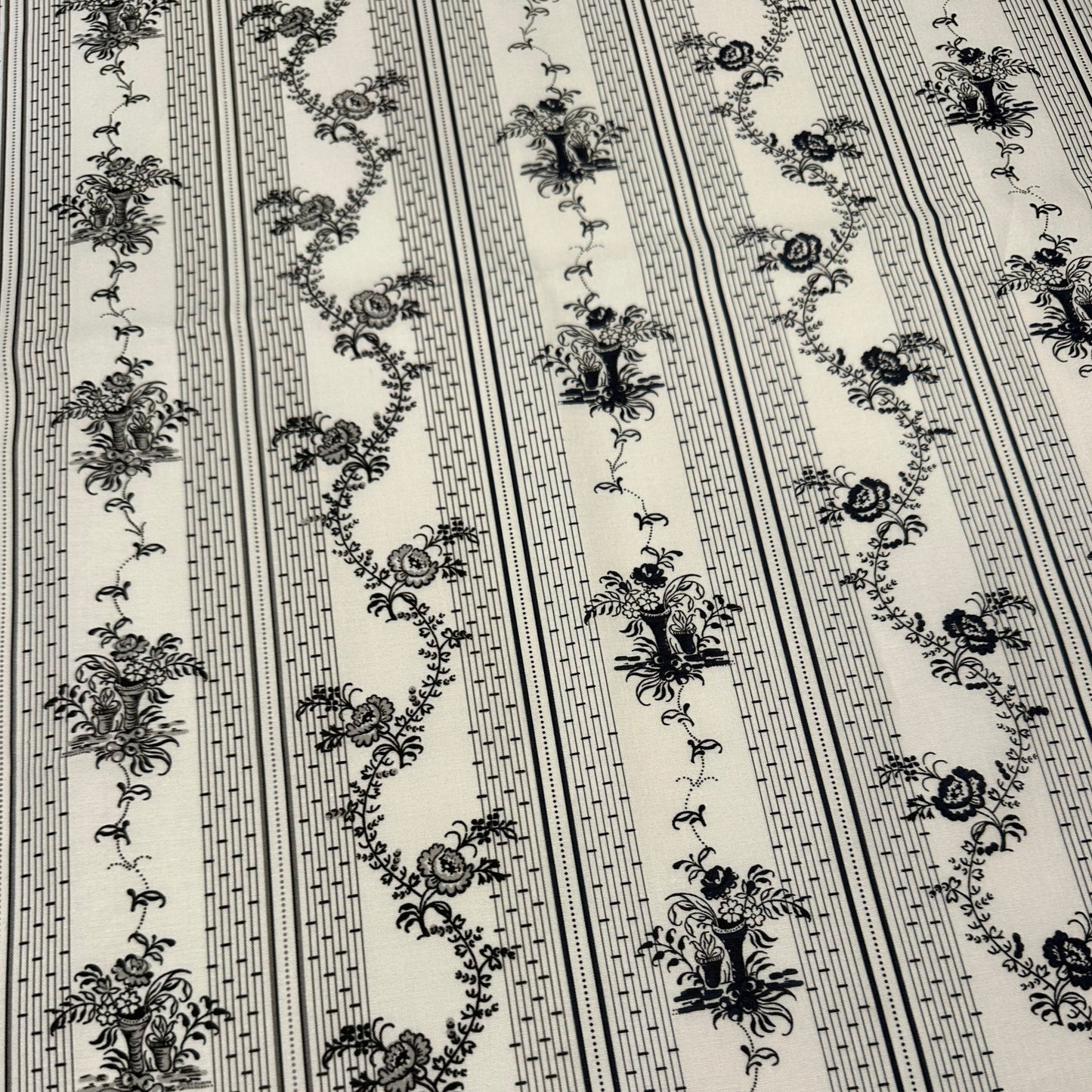
1790 Eva Sophie Piper - Black
1790 Eva Sophie Piper - Black
Design reference nr:
SKU:48790007
Couldn't load pickup availability
Product Description
This design is inspired by a late 18th-century French cotton dress textile featuring elegant vertical stripe formations combined with floral garlands and decorative vase motifs. Presented here in a refined monochrome grey-black interpretation, the pattern creates a balanced and architectural expression suitable for historically inspired garments of the Rococo and transitional 1790s period.
The structured stripe composition combined with delicate floral ornament reflects the refined decorative language associated with French robe à la française textiles. By simplifying the design into a restrained monochrome palette, the historical rhythm and ornamental elegance become especially visible while maintaining strong versatility for historical dressmaking.
Well suited for
Well suited for robe à la française gowns, Italian gowns, banyans, aprons, jackets, petticoats, historical workwear, museum interpretation, reenactment garments and historically inspired sewing projects. The vertical stripe layout also works beautifully for structured 18th-century silhouettes and decorative garment panels.
Design & Historical Context
The inspiration for this design comes from a late 18th-century French cotton dress in the style of a robe à la française. Printed cotton textiles with floral stripes and repeating ornamental arrangements became highly fashionable throughout Europe during the second half of the 18th century, appreciated for their decorative elegance and adaptability within both aristocratic and fashionable urban dress.

Sophie von Fersen, later married Piper, was a Swedish noblewoman born in 1757. She became associated with late 18th-century Swedish court culture and political life and remains historically connected to the world surrounding Hedvig Elisabeth Charlotta’s famous court diaries.