1837 Ernestine Rose
1837 Ernestine Rose
Design reference nr:
SKU:48500099
Couldn't load pickup availability
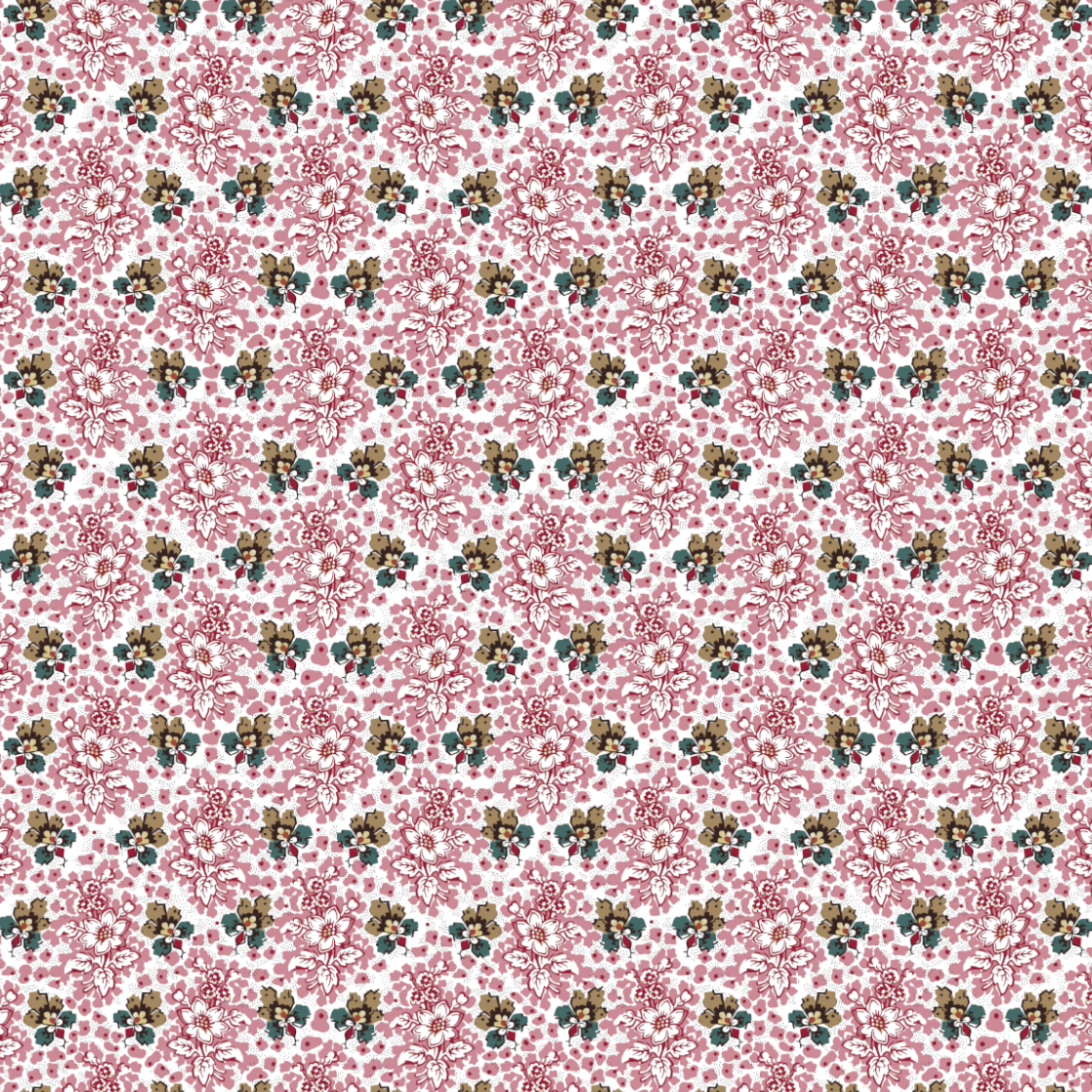
1830s Pink Floral Cotton Print – Romantic Early Victorian Style
This lively floral print combines soft dusty pink blossoms with stylised crimson floral sprays and decorative leaf motifs in warm brown, olive green, and muted teal tones. The design is arranged across a light cream ground enriched with scattered dotted details that create movement and texture throughout the composition.
The playful contrast between romantic floral bouquets and folk-inspired geometric leaf elements gives the textile a cheerful yet refined early Victorian character. The balanced palette of rose pink, deep red, warm brown, and green creates a highly decorative surface typical of printed cottons popular during the 1830s and 1840s.
The design recalls lightweight dress cottons and furnishing prints used for day dresses, wrappers, aprons, and domestic interiors during the romantic era of early Victorian fashion.
Perfect for:
- Early Victorian day dresses and wrappers
- Gigot sleeve gowns and romantic bodices
- Aprons, fichus, and historical accessories
- Children’s clothing and doll projects
- Romantic cottage-style interiors
- Quilting and decorative sewing projects
 Ernestine Rose was an atheist, a feminist, and an abolitionist known as “Queen of the Platform.” Born in 1810 in Poland, she refused to marry the man her father had chosen for her. She then traveled to Berlin, Paris, England, and finally New York, where she began her political activity. By 1850, she was central to the women’s rights, anti-slavery, and free thought movements, in which she was the only foreigner, the only atheist, and the only Jew. Following the Civil War, she returned to England, where she continued her activism in the free thought and women’s movements.